
№ 006 / Opening sequence
A little depth. A clear destination.
Depth directs attention and reveals relationships.
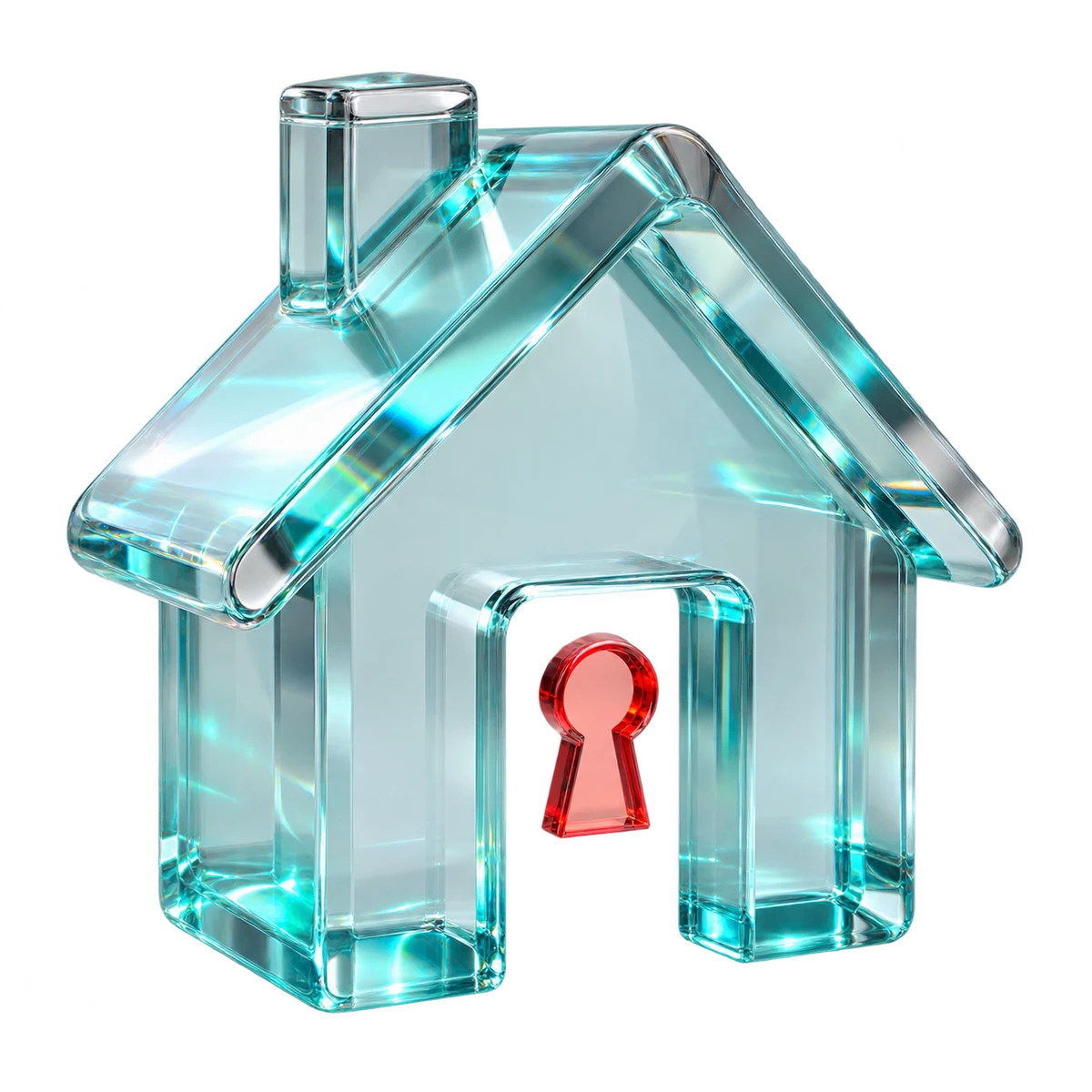 Make the entrance obvious.CONCEPT ART / NOT A REAL PROPERTY
IN EVERYDAY WORDS
The camera approaches an actual opening and moves inside. Near surfaces pass you while the far frame remains a visual anchor.
The look
A glass studio has a real doorway, thick walls, a roof and a visible interior. The opening remains recognizable as you approach.
Say this to a designer
Build a dimensional scene with an actual open doorway and an interior landmark. Show the complete structure, align the camera with the opening, then move through it. Keep the same light or object visible so the viewer can follow the journey. Place readable text outside the moving surfaces.
Direct the motion
These are starting points, not fixed rules. Match the timing to the content and the person using it.
- trigger
- The visitor scrolls into the illustration or plays its example.
- entrance
- Begin with the whole subject visible at a slight angle, surrounded by room to move.
- path
- Arc toward the opening, align with its center before crossing the threshold, then continue forward. Keep the far landmark in view.
- timing
- Use a deliberate 1.5–2-second timed camera move, or a generous scroll distance. Stop the camera before the reading hold.
- easing
- Ease in and out. Avoid a sudden change in speed or direction.
- hold
- Keep the important detail and its label in a stable final composition.
- exit
- Pass through the opening into the next view. Continue forward; do not reverse the camera to reset the scene.
The vocabulary
- Parallax
- Nearer objects appearing to move more than distant objects as the viewpoint changes.
- Dolly
- Moving the camera toward, away from, or alongside the subject.
- Pan
- Turning the camera left or right from its position.
- Foreground / background
- The layers nearest to and farthest from the viewer.
Make it fit your project
Good places to use it: concept illustration, hero object, before-and-after reveal.
A dimensional object helps explain the subject or reveal a useful detail.
Watch for: Do not invent property features, alter a real listing deceptively, or put form controls on a moving camera.
When motion is off: Show the composed final illustration with all explanatory labels.
Implementation and accessibility
- Model the foreground structure, open doorway and interior landmark as separate dimensional parts.
- Choose one visual anchor that remains recognizable.
- Use an authored camera path that clears the jambs and roof. Preserve direction through the opening.
- Bring the important detail forward, then settle before reading.
- Label conceptual real estate artwork as illustrative.
- Keep text outside transformed artwork.
- Provide a meaningful description when the image teaches information.
- Respect the motion preference and give a page-level toggle.
- Use bounded geometry, one WebGL canvas and an optimized still-image fallback.
- Bound travel distances; do not animate heavy filters continuously.
Give it to your AI
Download the working source and example assets. Match this reference number in the included catalog to its renderer.
Replace [ELEMENT] with the part of your project you want to change. The prompt includes the design brief, motion direction, definitions, and implementation steps.
Read the full prompt
Use AI Acceleration Design Ref #006 (A little depth. A clear destination., version 3) on [ELEMENT] in my existing project.

Permanent reference: https://aiacceleration.ai/designrefs/006. This local brief contains the full definition. Inspect my existing stack, component, design tokens and interaction before editing.

Goal: Depth directs attention and reveals relationships.

DESIGN REF #006 · A little depth. A clear destination.

In everyday words: The camera approaches an actual opening and moves inside. Near surfaces pass you while the far frame remains a visual anchor.

The look: A glass studio has a real doorway, thick walls, a roof and a visible interior. The opening remains recognizable as you approach.

Say this to a designer:
Build a dimensional scene with an actual open doorway and an interior landmark. Show the complete structure, align the camera with the opening, then move through it. Keep the same light or object visible so the viewer can follow the journey. Place readable text outside the moving surfaces.

Motion direction (starting points to adapt):
Trigger: The visitor scrolls into the illustration or plays its example.
Entrance: Begin with the whole subject visible at a slight angle, surrounded by room to move.
Path: Arc toward the opening, align with its center before crossing the threshold, then continue forward. Keep the far landmark in view.
Timing: Use a deliberate 1.5–2-second timed camera move, or a generous scroll distance. Stop the camera before the reading hold.
Easing: Ease in and out. Avoid a sudden change in speed or direction.
Hold: Keep the important detail and its label in a stable final composition.
Exit: Pass through the opening into the next view. Continue forward; do not reverse the camera to reset the scene.

Design vocabulary:
Parallax: Nearer objects appearing to move more than distant objects as the viewpoint changes.
Dolly: Moving the camera toward, away from, or alongside the subject.
Pan: Turning the camera left or right from its position.
Foreground / background: The layers nearest to and farthest from the viewer.

Reduced motion: Show the composed final illustration with all explanatory labels.

Implement:
1. Model the foreground structure, open doorway and interior landmark as separate dimensional parts.
2. Choose one visual anchor that remains recognizable.
3. Use an authored camera path that clears the jambs and roof. Preserve direction through the opening.
4. Bring the important detail forward, then settle before reading.
5. Label conceptual real estate artwork as illustrative.

Adapt the reference to my branding and content. Preserve existing functionality and semantic HTML.
Reduced motion: Show the composed final illustration with all explanatory labels.
Accessibility: Keep text outside transformed artwork. Provide a meaningful description when the image teaches information. Respect the motion preference and give a page-level toggle.
Performance: Use bounded geometry, one WebGL canvas and an optimized still-image fallback. Bound travel distances; do not animate heavy filters continuously.
Avoid: Do not invent property features, alter a real listing deceptively, or put form controls on a moving camera.

Show me the working result, verify keyboard, mobile, loading/error and reduced-motion behavior, and explain any tradeoff. Do not publish or change unrelated elements.
Permanent reference #006 · version 3. Pairs with #001, #004.