01
Room use
Living room, primary bedroom, office, dining area, or another specific function.
Grok Imagine playbook
Use image editing with a short furniture list and an explicit property lock list. Treat each result as a draft until it passes a side-by-side check.
Controlled fictional room demonstration. The player teaches the source-image, property-lock, client-direction, and verification pattern; current Grok product and API capabilities can change.
Treat this as one connected operating system: capture an honest source with the source-photography guide, build the property locks and client direction in the prompt library, run the edit in the model playbook you choose, compare both files with the quality-control gate, then package the accepted draft with the disclosure and record system. FSBO sellers can continue into the owner publishing workflow. Agents can turn the verified evidence pair into a source-led content bundle and a citable SEO/GEO page.
Upload the original room photo and state that it—not a style reference—controls geometry and property facts.
Separate the room goal, short furniture list, property lock list, lighting rules, and negative constraints.
Ask for one restrained arrangement before exploring variations. More variants create more verification work.
Name one mistake at a time: scale, placement, shadow, or a changed feature. Restate what must remain fixed.
A polished image can still be the wrong room. Compare permanent details, view, proportions, and condition.
Keep the source, revision, final, and disclosure together before publishing or handing the files off.
Customize for the client
The client should be able to choose the presentation direction without giving the model permission to redesign the home. Record these six fields, get the direction approved, then insert the exact answers into the prompt.
01
Living room, primary bedroom, office, dining area, or another specific function.
02
Entry, mid-market, premium, rental, or FSBO context. This controls restraint and finish, not property facts.
03
Name one useful direction such as warm contemporary or soft modern-traditional.
04
Minimal, balanced, or fuller. Set the walking path and the short essential-furniture list.
05
Camera, crop, geometry, openings, fixtures, materials, view, light direction, and visible condition.
06
Use property and design context. Do not target or assume protected classes, family status, disability, religion, race, or another protected trait.
Treat this as one connected operating system: capture an honest source with the source-photography guide, build the property locks and client direction in the prompt library, run the edit in the model playbook you choose, compare both files with the quality-control gate, then package the accepted draft with the disclosure and record system. FSBO sellers can continue into the owner publishing workflow. Agents can turn the verified evidence pair into a source-led content bundle and a citable SEO/GEO page.
Multiple variants feel fast until you have to inspect all of them. Start with one restrained furniture plan and compare it against the original before asking Grok for another direction.
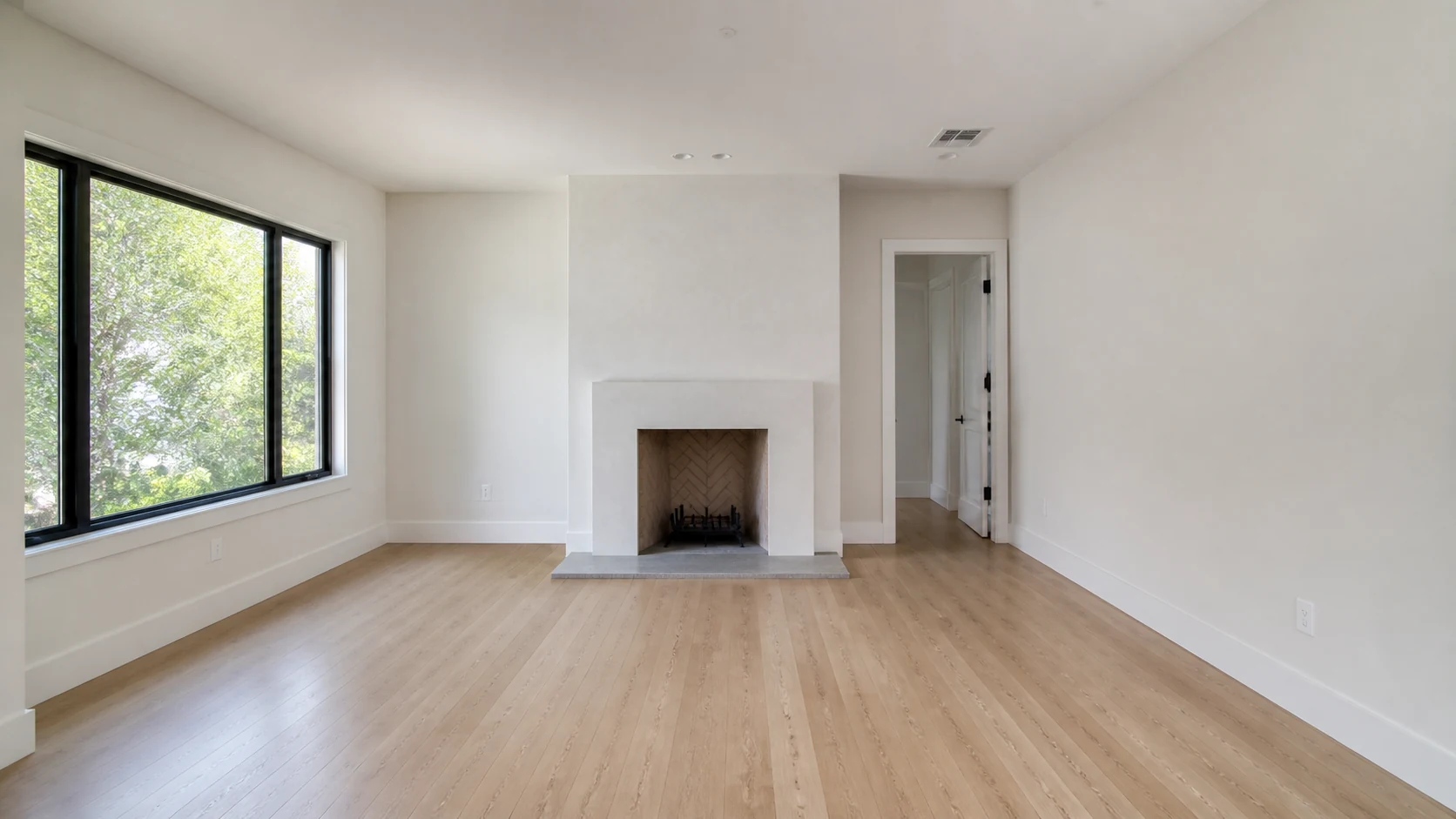
Before — original empty room
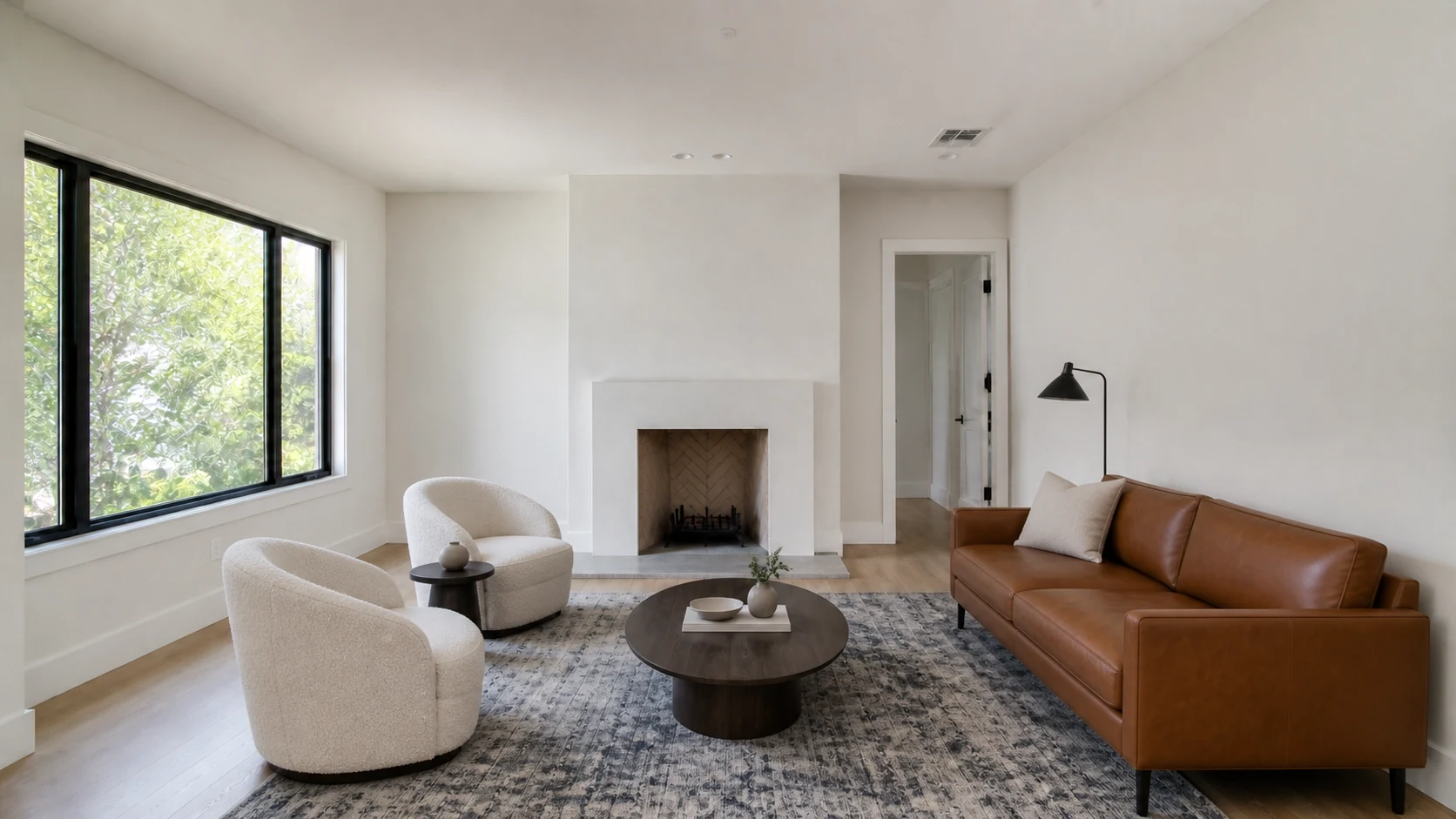
After — virtually staged draft
Grok image-edit prompt
Edit this uploaded real-estate photo as the source image.

Add a restrained [STYLE] furniture layout for this exact [ROOM TYPE]. Use only movable furniture and decor: [SHORT FURNITURE LIST].

Image constraints: preserve the original camera, framing, perspective, dimensions, walls, openings, ceiling, flooring, built-ins, fixtures, materials, exterior view, lighting direction, and visible property condition.

Use realistic scale, contact shadows, reflections, and clear circulation. Do not alter, repair, remove, conceal, widen, or invent any property feature. No people, pets, text, or logos. Produce one photorealistic listing image at the original aspect ratio.
Research sources
xAI’s current first-party documentation for image generation and editing capabilities.
Truth-in-advertising rules for claims and visual representations.
Official Fair Housing guidance for housing-related digital advertising.
A risk-management framework supporting review and documentation of generated work.
Product access, limits, local listing rules, platform policies, and laws can change. Re-check the linked authority before important or public work.
Keep building
AI Acceleration: Real Estate is a private, self-directed curriculum for practical AI work across content, communication, lead follow-up, CRM, client research, operations, and relationship management. Build it. Review it. Keep what works.
Explore the Skool community ↗Follow Ryan + AI Acceleration
No ranking, revenue, closing, or time-saving promise. The classes teach the work and the review systems around it.