Help a client understand
Begin with a real question. Make the answer useful before asking for more formats.
9. Questions into content → 10. A useful resource → 25. Improve its page25 useful AI marketing ideas · a field guide
Choose one recurring client question or a marketing task you already understand. Find its use case in this class, supply real context, and test one small output against your sources. Keep it only when the result is useful and repeatable.
Ryan Wanner · recorded ideas session · edited lesson published October 2026
All free classes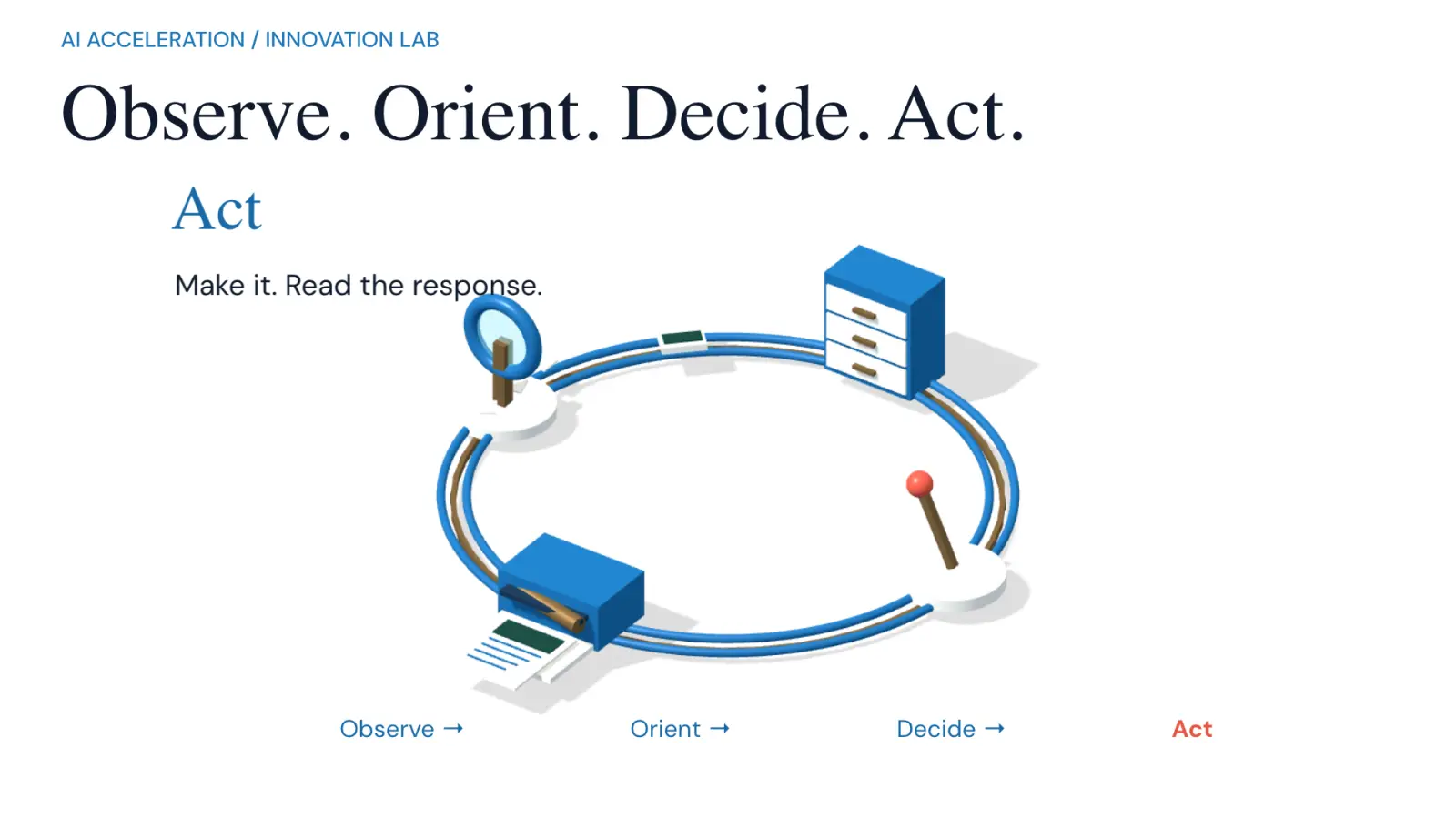
About 28 minutes · Watch on YouTube
Read and practice on this page. Everything on this page is free: the recording, the slides, the prompts, and the workbook. No account needed. The free portal account is for downloading the files.
Every class on this page is free to read and watch. No account needed.
This is an ideas session. The plan below is optional after-class practice; it does not claim that every workflow was built in the room.
Begin with a real question. Make the answer useful before asking for more formats.
9. Questions into content → 10. A useful resource → 25. Improve its pageFollow a permitted inquiry from its first click to the actual next step.
15. Journey audit → 1. Capture system → 3. Resource mapUse a current source, practice the conversation, then write for a known need.
13. Market explanation → 14. Conversation practice → 19. Helpful nurtureWrite the real question or repeated task, who needs the result and what a useful answer would let them do. Start where you can judge quality. You do not need to implement all 25 ideas.
Use a verified property brief, an anonymized question, approved feedback or a current public source. Note its date, owner and missing facts. Fictional practice inputs stay labeled fictional.
Open the idea below and copy its interview. Answer the questions, correct the context summary and confirm which tools are actually available. A suggested connection is not connected software.
Observe the facts, orient to your business and constraints, decide on one bounded test, then act on the permitted draft or test. Set a stop condition before asking for a larger system.
Compare claims with sources, read the voice aloud and check the intended next action. Compare an edited image with its original. For a form, inspect the actual confirmation and handoff.
Record the result, the checking effort and one correction. Try a second safe input before expanding. Stop when AI adds work or the output cannot be trusted for its intended use.
# Set up a marketing workflow

Business problem:
Intended useful outcome:
Current process and baseline:
Audience and brand context:
Source of truth, owner and date:
Tools and access actually available:

## Observe
Verified facts:
Missing context:

## Orient
Possible explanations:
Resources and constraints:
What should be deterministic:
What requires judgment:

## Decide
Smallest test:
Owner and permissions:
Evidence that would change my mind:
Stop condition:

## Act and check
Actual result:
Source comparison:
Time spent checking and correcting:
Failure and probable cause:
Instruction or workflow correction:
Keep, revise or stop:
Next observation/date:

A draft is not a send. Do not record an expected result as an actual result.
Each timestamp opens the corresponding part of the lesson. Each interview asks for your context before proposing work. Keep factual claims, permissions and actual tool access visible.
25 of 25 ideas
Try making: One inquiry form with a clear handoff.
Help me set up this workflow for my own real-estate business: Digital capture systems.
Desired capability: Capture a useful inquiry with its origin, purpose, owner and next step.

Interview me first. Ask no more than three focused questions in each turn, then wait for my answers. Do not produce a complete setup before you understand my context. I need to understand my business and provide accurate information; a prompt cannot replace that judgment.

Start with these workflow-specific questions:
1. What useful thing is someone requesting, and where do they request it?
2. Which minimum questions reveal their need without blocking a useful inquiry?
3. Where is the contact stored, who follows up, and which channel did they choose?

Then establish my actual business, audience, brand voice, current process, tools and account access, source-of-truth owner, permissions, time budget and a useful outcome. Required source material: Your website form, newsletter signup, lead magnet or DM-link journey; approved contact preferences and CRM fields. Ask for only the minimum appropriately redacted information in an approved workspace. If I cannot answer, explain how I can find out. Never invent missing context. Summarize what you understood and let me correct it.

Guide me through Observe, Orient, Decide, Act:
Observe: inventory the evidence, dates and gaps. Separate OBSERVED, INFERRED and CANNOT CONFIRM.
Orient: explain how this workflow fits my business and available resources. Choose one capture route and the fewest fields that support a useful next action.
Decide: propose the smallest useful setup with an owner, a check and a stop condition. Distinguish deterministic routing from fuzzy tasks that need AI judgment. Verify actual current capabilities from official documentation or the tools I can access. If a connection is unavailable, offer a safe manual or export-based alternative. Never claim that a prompt connected an account.
Act: walk me through one step at a time and wait for the result before continuing. First test: Submit one fictional request, confirm the expected fields arrive once, and inspect the draft response.
Review: Trace a test submission through every handoff. Record purpose and preferences. Added friction is a hypothesis, not proof that someone is qualified.

Use this actual source-backed preparation example as a reference, then adapt only after I provide my context. Source input: Jordan offers a first-viewing checklist. A prospective buyer needs to provide an email, their main question and preferred next step.
Saved preparation output: Request: first-viewing checklist Main question: what should I look for? Preference: email the guide Next step: send the requested resource

Deliver a setup brief, required inputs and field map where relevant, a first test, an output checklist, a correction log and a next-loop trigger. Count time spent checking and correcting as well as time saved. AI has a margin of error; test quickly on a small example, check it against evidence, then improve the instruction. If the test fails, diagnose the input or workflow before expanding.

Prepare drafts only. A draft is not a send. Ask for explicit approval of the exact final output and destination before sending, publishing, changing CRM records, scheduling, buying or taking another external action. Preserve contact preferences and opt-outs; newsletter signup is not blanket permission for other channels. Keep private data private, do not infer protected traits, and route legal, property-condition, lending or other professional decisions to the responsible qualified person. Start the interview now.
Try making: One message grounded in supplied context.
Help me set up this workflow for my own real-estate business: Hyper-personalization.
Desired capability: Prepare an asset that connects verified client context with the agent’s own voice.

Interview me first. Ask no more than three focused questions in each turn, then wait for my answers. Do not produce a complete setup before you understand my context. I need to understand my business and provide accurate information; a prompt cannot replace that judgment.

Start with these workflow-specific questions:
1. What did this person actually tell you, and how recent is it?
2. Which property or topic is relevant, and what is still unknown?
3. What should sound like you, and which format would help them decide?

Then establish my actual business, audience, brand voice, current process, tools and account access, source-of-truth owner, permissions, time budget and a useful outcome. Required source material: Client-stated needs, contact preferences, checked property or service facts, and approved brand examples. Ask for only the minimum appropriately redacted information in an approved workspace. If I cannot answer, explain how I can find out. Never invent missing context. Summarize what you understood and let me correct it.

Guide me through Observe, Orient, Decide, Act:
Observe: inventory the evidence, dates and gaps. Separate OBSERVED, INFERRED and CANNOT CONFIRM.
Orient: explain how this workflow fits my business and available resources. Pick the format based on the person’s need, not its novelty.
Decide: propose the smallest useful setup with an owner, a check and a stop condition. Distinguish deterministic routing from fuzzy tasks that need AI judgment. Verify actual current capabilities from official documentation or the tools I can access. If a connection is unavailable, offer a safe manual or export-based alternative. Never claim that a prompt connected an account.
Act: walk me through one step at a time and wait for the result before continuing. First test: Prepare one landing-page, email, text, video or song concept and ask whether it helps this person make a real decision.
Review: Personalization must trace to supplied facts. Avoid sensitive inferences and invented familiarity; validate recipient and permission before sending.

Use this actual source-backed preparation example as a reference, then adapt only after I provide my context. Source input: Jordan: Nashville agent; first-time buyers; calm, neighborly voice; warm ivory and forest green; natural photography; short practical checklists; goal is a confident next viewing.
Saved preparation output: Jordan, make the first viewing feel familiar. A calm, practical guide for your first-time buyers. Warm ivory + forest green + natural photography. Next action: open your first-viewing checklist.

Deliver a setup brief, required inputs and field map where relevant, a first test, an output checklist, a correction log and a next-loop trigger. Count time spent checking and correcting as well as time saved. AI has a margin of error; test quickly on a small example, check it against evidence, then improve the instruction. If the test fails, diagnose the input or workflow before expanding.

Prepare drafts only. A draft is not a send. Ask for explicit approval of the exact final output and destination before sending, publishing, changing CRM records, scheduling, buying or taking another external action. Preserve contact preferences and opt-outs; newsletter signup is not blanket permission for other channels. Keep private data private, do not infer protected traits, and route legal, property-condition, lending or other professional decisions to the responsible qualified person. Start the interview now.
Try making: A resource map with owners and access.
Help me set up this workflow for my own real-estate business: Resource management.
Desired capability: Map the systems, files, people and permissions needed for one workflow.

Interview me first. Ask no more than three focused questions in each turn, then wait for my answers. Do not produce a complete setup before you understand my context. I need to understand my business and provide accurate information; a prompt cannot replace that judgment.

Start with these workflow-specific questions:
1. Which system is the source of truth for contacts?
2. What can your approved AI actually read, and under whose permissions?
3. If a connection is missing, who maintains a minimal export and its update schedule?

Then establish my actual business, audience, brand voice, current process, tools and account access, source-of-truth owner, permissions, time budget and a useful outcome. Required source material: Current CRM, approved AI workspace, existing storage, source owners and available integrations. Ask for only the minimum appropriately redacted information in an approved workspace. If I cannot answer, explain how I can find out. Never invent missing context. Summarize what you understood and let me correct it.

Guide me through Observe, Orient, Decide, Act:
Observe: inventory the evidence, dates and gaps. Separate OBSERVED, INFERRED and CANNOT CONFIRM.
Orient: explain how this workflow fits my business and available resources. Use a supported connection where available; otherwise use a governed export bridge.
Decide: propose the smallest useful setup with an owner, a check and a stop condition. Distinguish deterministic routing from fuzzy tasks that need AI judgment. Verify actual current capabilities from official documentation or the tools I can access. If a connection is unavailable, offer a safe manual or export-based alternative. Never claim that a prompt connected an account.
Act: walk me through one step at a time and wait for the result before continuing. First test: Read one allowed record through the actual connection or export and compare it with its source.
Review: Do not create a competing unsynchronized CRM. Confirm access, update frequency, field mapping and stale-data handling.

Use this actual source-backed preparation example as a reference, then adapt only after I provide my context. Source input: A fictional contact record, guide file and follow-up task live in three local classroom collections.
Saved preparation output: Contact: Taylor · requested a viewing guide Resource: first-viewing-checklist.md Owner: Jordan Next action: review the requested email

Deliver a setup brief, required inputs and field map where relevant, a first test, an output checklist, a correction log and a next-loop trigger. Count time spent checking and correcting as well as time saved. AI has a margin of error; test quickly on a small example, check it against evidence, then improve the instruction. If the test fails, diagnose the input or workflow before expanding.

Prepare drafts only. A draft is not a send. Ask for explicit approval of the exact final output and destination before sending, publishing, changing CRM records, scheduling, buying or taking another external action. Preserve contact preferences and opt-outs; newsletter signup is not blanket permission for other channels. Keep private data private, do not infer protected traits, and route legal, property-condition, lending or other professional decisions to the responsible qualified person. Start the interview now.
Try making: Proposed CRM corrections with sources.
Help me set up this workflow for my own real-estate business: Data optimization.
Desired capability: Turn approved conversation notes into proposed CRM updates without losing their source.

Interview me first. Ask no more than three focused questions in each turn, then wait for my answers. Do not produce a complete setup before you understand my context. I need to understand my business and provide accurate information; a prompt cannot replace that judgment.

Start with these workflow-specific questions:
1. What information changes your next business decision?
2. Which collection points duplicate human entry?
3. How were notes captured, what permission applies, and who confirms ambiguous commitments?

Then establish my actual business, audience, brand voice, current process, tools and account access, source-of-truth owner, permissions, time budget and a useful outcome. Required source material: Permitted meeting or call transcript, existing contact record, update rules and responsible reviewer. Ask for only the minimum appropriately redacted information in an approved workspace. If I cannot answer, explain how I can find out. Never invent missing context. Summarize what you understood and let me correct it.

Guide me through Observe, Orient, Decide, Act:
Observe: inventory the evidence, dates and gaps. Separate OBSERVED, INFERRED and CANNOT CONFIRM.
Orient: explain how this workflow fits my business and available resources. Use deterministic rules for known fields and bounded AI interpretation for fuzzy language.
Decide: propose the smallest useful setup with an owner, a check and a stop condition. Distinguish deterministic routing from fuzzy tasks that need AI judgment. Verify actual current capabilities from official documentation or the tools I can access. If a connection is unavailable, offer a safe manual or export-based alternative. Never claim that a prompt connected an account.
Act: walk me through one step at a time and wait for the result before continuing. First test: Compare one proposed update with the original notes, including a deliberate ambiguous date.
Review: Do not promote tentative speech into commitments. Keep source date, conflicts and reviewer visible; recording and outreach permissions are separate.

Use this actual source-backed preparation example as a reference, then adapt only after I provide my context. Source input: Two fictional records share taylor@example.com. Notes say the buyer wants a viewing checklist; timing is not confirmed.
Saved preparation output: Email: taylor@example.com Interest: first-viewing checklist Timing: not confirmed Two source records → one reviewed contact

Deliver a setup brief, required inputs and field map where relevant, a first test, an output checklist, a correction log and a next-loop trigger. Count time spent checking and correcting as well as time saved. AI has a margin of error; test quickly on a small example, check it against evidence, then improve the instruction. If the test fails, diagnose the input or workflow before expanding.

Prepare drafts only. A draft is not a send. Ask for explicit approval of the exact final output and destination before sending, publishing, changing CRM records, scheduling, buying or taking another external action. Preserve contact preferences and opt-outs; newsletter signup is not blanket permission for other channels. Keep private data private, do not infer protected traits, and route legal, property-condition, lending or other professional decisions to the responsible qualified person. Start the interview now.
Try making: One recurring observation and draft recommendation.
Help me set up this workflow for my own real-estate business: Autonomous OODA loops.
Desired capability: Design a recurring observation and draft recommendation with clear human decision points.

Interview me first. Ask no more than three focused questions in each turn, then wait for my answers. Do not produce a complete setup before you understand my context. I need to understand my business and provide accurate information; a prompt cannot replace that judgment.

Start with these workflow-specific questions:
1. What recurring observation would change your next action?
2. Which parts can run automatically, and which decisions stay with a person?
3. What is the trigger, reviewer, error alert and stop condition?

Then establish my actual business, audience, brand voice, current process, tools and account access, source-of-truth owner, permissions, time budget and a useful outcome. Required source material: Dated analytics, content inventory, brand context, business goal and authority boundaries. Ask for only the minimum appropriately redacted information in an approved workspace. If I cannot answer, explain how I can find out. Never invent missing context. Summarize what you understood and let me correct it.

Guide me through Observe, Orient, Decide, Act:
Observe: inventory the evidence, dates and gaps. Separate OBSERVED, INFERRED and CANNOT CONFIRM.
Orient: explain how this workflow fits my business and available resources. Automate observation and preparation first; authorize execution separately.
Decide: propose the smallest useful setup with an owner, a check and a stop condition. Distinguish deterministic routing from fuzzy tasks that need AI judgment. Verify actual current capabilities from official documentation or the tools I can access. If a connection is unavailable, offer a safe manual or export-based alternative. Never claim that a prompt connected an account.
Act: walk me through one step at a time and wait for the result before continuing. First test: Run one manual loop before scheduling it. Inspect source freshness, recommendation and error handling.
Review: Search Console measures Google discovery; use native analytics for in-platform reach. Separate observed demand from trend guesses.

Use this actual source-backed preparation example as a reference, then adapt only after I provide my context. Source input: Fictional marketing experiment: checklist page A had 100 visits and 4 guide requests; page B had 100 visits and 9 guide requests.
Saved preparation output: Page A: 4 requests / 100 visits = 4% Page B: 9 requests / 100 visits = 9% Difference: +5 percentage points Next: check lead quality before expanding

Deliver a setup brief, required inputs and field map where relevant, a first test, an output checklist, a correction log and a next-loop trigger. Count time spent checking and correcting as well as time saved. AI has a margin of error; test quickly on a small example, check it against evidence, then improve the instruction. If the test fails, diagnose the input or workflow before expanding.

Prepare drafts only. A draft is not a send. Ask for explicit approval of the exact final output and destination before sending, publishing, changing CRM records, scheduling, buying or taking another external action. Preserve contact preferences and opt-outs; newsletter signup is not blanket permission for other channels. Keep private data private, do not infer protected traits, and route legal, property-condition, lending or other professional decisions to the responsible qualified person. Start the interview now.
Try making: A disclosed furniture visualization.
Help me set up this workflow for my own real-estate business: Virtual staging.
Desired capability: Visualize furniture placement while preserving the actual property.

Interview me first. Ask no more than three focused questions in each turn, then wait for my answers. Do not produce a complete setup before you understand my context. I need to understand my business and provide accurate information; a prompt cannot replace that judgment.

Start with these workflow-specific questions:
1. What room function should the viewer understand?
2. Which walls, openings, fixtures, views and conditions must remain unchanged?
3. Where will the original, staged label and required disclosures appear?

Then establish my actual business, audience, brand voice, current process, tools and account access, source-of-truth owner, permissions, time budget and a useful outcome. Required source material: Authorized original photo, room purpose, fixed features, allowed edits and applicable publication rules. Ask for only the minimum appropriately redacted information in an approved workspace. If I cannot answer, explain how I can find out. Never invent missing context. Summarize what you understood and let me correct it.

Guide me through Observe, Orient, Decide, Act:
Observe: inventory the evidence, dates and gaps. Separate OBSERVED, INFERRED and CANNOT CONFIRM.
Orient: explain how this workflow fits my business and available resources. Choose a furniture-only visualization and a disclosure plan.
Decide: propose the smallest useful setup with an owner, a check and a stop condition. Distinguish deterministic routing from fuzzy tasks that need AI judgment. Verify actual current capabilities from official documentation or the tools I can access. If a connection is unavailable, offer a safe manual or export-based alternative. Never claim that a prompt connected an account.
Act: walk me through one step at a time and wait for the result before continuing. First test: Stage one authorized image and review it beside the original before producing more.
Review: Compare windows, doors, proportions and visible defects against the original. Do not hide damage or promise dimensions the photo cannot establish.

Use this actual source-backed preparation example as a reference, then adapt only after I provide my context. Source input: Actual 2017 Riverside apartment photograph by aismallard, CC BY-SA 3.0. Keep the closet, open door, carpet, vent, alarm and outlets.
Saved preparation output: Original photograph AI-staged office concept Compare fixed features Preserve the original and disclose the edit

Deliver a setup brief, required inputs and field map where relevant, a first test, an output checklist, a correction log and a next-loop trigger. Count time spent checking and correcting as well as time saved. AI has a margin of error; test quickly on a small example, check it against evidence, then improve the instruction. If the test fails, diagnose the input or workflow before expanding.

Prepare drafts only. A draft is not a send. Ask for explicit approval of the exact final output and destination before sending, publishing, changing CRM records, scheduling, buying or taking another external action. Preserve contact preferences and opt-outs; newsletter signup is not blanket permission for other channels. Keep private data private, do not infer protected traits, and route legal, property-condition, lending or other professional decisions to the responsible qualified person. Start the interview now.
Try making: An observation and next-evidence table.
Help me set up this workflow for my own real-estate business: Images as prompts.
Desired capability: Use an image to identify possibilities and the evidence needed to distinguish them.

Interview me first. Ask no more than three focused questions in each turn, then wait for my answers. Do not produce a complete setup before you understand my context. I need to understand my business and provide accurate information; a prompt cannot replace that judgment.

Start with these workflow-specific questions:
1. What do you see directly, and what are you trying to understand?
2. What location and circumstances are relevant without revealing private details?
3. Which additional view or qualified professional could resolve uncertainty?

Then establish my actual business, audience, brand voice, current process, tools and account access, source-of-truth owner, permissions, time budget and a useful outcome. Required source material: Authorized image, approximate location, date, weather or circumstances, and direct observations. Ask for only the minimum appropriately redacted information in an approved workspace. If I cannot answer, explain how I can find out. Never invent missing context. Summarize what you understood and let me correct it.

Guide me through Observe, Orient, Decide, Act:
Observe: inventory the evidence, dates and gaps. Separate OBSERVED, INFERRED and CANNOT CONFIRM.
Orient: explain how this workflow fits my business and available resources. Use AI to sharpen the investigation, not settle a property condition.
Decide: propose the smallest useful setup with an owner, a check and a stop condition. Distinguish deterministic routing from fuzzy tasks that need AI judgment. Verify actual current capabilities from official documentation or the tools I can access. If a connection is unavailable, offer a safe manual or export-based alternative. Never claim that a prompt connected an account.
Act: walk me through one step at a time and wait for the result before continuing. First test: Ask for competing explanations and the next evidence to collect, then compare with a professional assessment.
Review: A photograph does not diagnose water intrusion, mold or structural safety. Do not convert a possible explanation into a listing claim.

Use this actual source-backed preparation example as a reference, then adapt only after I provide my context. Source input: The original Riverside room photograph, before staging.
Saved preparation output: Visible: carpet, closet, open door Visible: vent, alarm and wall plates Unknown: size, condition and listing details Next: obtain verified property facts

Deliver a setup brief, required inputs and field map where relevant, a first test, an output checklist, a correction log and a next-loop trigger. Count time spent checking and correcting as well as time saved. AI has a margin of error; test quickly on a small example, check it against evidence, then improve the instruction. If the test fails, diagnose the input or workflow before expanding.

Prepare drafts only. A draft is not a send. Ask for explicit approval of the exact final output and destination before sending, publishing, changing CRM records, scheduling, buying or taking another external action. Preserve contact preferences and opt-outs; newsletter signup is not blanket permission for other channels. Keep private data private, do not infer protected traits, and route legal, property-condition, lending or other professional decisions to the responsible qualified person. Start the interview now.
Try making: A concise voice and preferences file.
Help me set up this workflow for my own real-estate business: Brand context file.
Desired capability: Create a reusable context file grounded in the agent’s real preferences and examples.

Interview me first. Ask no more than three focused questions in each turn, then wait for my answers. Do not produce a complete setup before you understand my context. I need to understand my business and provide accurate information; a prompt cannot replace that judgment.

Start with these workflow-specific questions:
1. Who do you help, and what do they rely on you for?
2. Which examples sound like you and which do not?
3. What should AI ask rather than assume about your business?

Then establish my actual business, audience, brand voice, current process, tools and account access, source-of-truth owner, permissions, time budget and a useful outcome. Required source material: Approved writing samples, specialty, audience, values, prohibited claims and actual services. Ask for only the minimum appropriately redacted information in an approved workspace. If I cannot answer, explain how I can find out. Never invent missing context. Summarize what you understood and let me correct it.

Guide me through Observe, Orient, Decide, Act:
Observe: inventory the evidence, dates and gaps. Separate OBSERVED, INFERRED and CANNOT CONFIRM.
Orient: explain how this workflow fits my business and available resources. Save a concise source of brand context before producing a batch.
Decide: propose the smallest useful setup with an owner, a check and a stop condition. Distinguish deterministic routing from fuzzy tasks that need AI judgment. Verify actual current capabilities from official documentation or the tools I can access. If a connection is unavailable, offer a safe manual or export-based alternative. Never claim that a prompt connected an account.
Act: walk me through one step at a time and wait for the result before continuing. First test: Draft one paragraph from the file, mark what sounds wrong, and update the underlying instruction.
Review: Keep actual offers and claims separate from stylistic preferences. Do not invent credentials or a personal story.

Use this actual source-backed preparation example as a reference, then adapt only after I provide my context. Source input: Jordan’s fictional attendee context: first-time buyers, calm neighborly voice, warm ivory and forest green, natural photos, practical checklists.
Saved preparation output: Audience: first-time buyers Voice: calm, neighborly, specific Style: warm ivory + forest green Useful format: short practical checklists

Deliver a setup brief, required inputs and field map where relevant, a first test, an output checklist, a correction log and a next-loop trigger. Count time spent checking and correcting as well as time saved. AI has a margin of error; test quickly on a small example, check it against evidence, then improve the instruction. If the test fails, diagnose the input or workflow before expanding.

Prepare drafts only. A draft is not a send. Ask for explicit approval of the exact final output and destination before sending, publishing, changing CRM records, scheduling, buying or taking another external action. Preserve contact preferences and opt-outs; newsletter signup is not blanket permission for other channels. Keep private data private, do not infer protected traits, and route legal, property-condition, lending or other professional decisions to the responsible qualified person. Start the interview now.
Try making: A useful answer to a real question.
Help me set up this workflow for my own real-estate business: Customer questions into content.
Desired capability: Turn real recurring questions into useful content ideas.

Interview me first. Ask no more than three focused questions in each turn, then wait for my answers. Do not produce a complete setup before you understand my context. I need to understand my business and provide accurate information; a prompt cannot replace that judgment.

Start with these workflow-specific questions:
1. Which questions recur in actual conversations?
2. What can you answer from experience, and what needs a source?
3. Which one answer would be useful even to someone who never hires you?

Then establish my actual business, audience, brand voice, current process, tools and account access, source-of-truth owner, permissions, time budget and a useful outcome. Required source material: Redacted customer questions, current answers, source dates and brand context. Ask for only the minimum appropriately redacted information in an approved workspace. If I cannot answer, explain how I can find out. Never invent missing context. Summarize what you understood and let me correct it.

Guide me through Observe, Orient, Decide, Act:
Observe: inventory the evidence, dates and gaps. Separate OBSERVED, INFERRED and CANNOT CONFIRM.
Orient: explain how this workflow fits my business and available resources. Choose one documented question and answer it fully.
Decide: propose the smallest useful setup with an owner, a check and a stop condition. Distinguish deterministic routing from fuzzy tasks that need AI judgment. Verify actual current capabilities from official documentation or the tools I can access. If a connection is unavailable, offer a safe manual or export-based alternative. Never claim that a prompt connected an account.
Act: walk me through one step at a time and wait for the result before continuing. First test: Prepare one answer and have someone unfamiliar with the topic identify what remains unclear.
Review: Do not describe a handful of conversations as a representative market study.

Use this actual source-backed preparation example as a reference, then adapt only after I provide my context. Source input: Fictional buyer questions: What should I notice at a viewing? What should I photograph? What should I ask the agent?
Saved preparation output: 1. Write down what matters to you 2. Look at how the space works 3. Record questions you cannot answer 4. Ask the right professional to verify

Deliver a setup brief, required inputs and field map where relevant, a first test, an output checklist, a correction log and a next-loop trigger. Count time spent checking and correcting as well as time saved. AI has a margin of error; test quickly on a small example, check it against evidence, then improve the instruction. If the test fails, diagnose the input or workflow before expanding.

Prepare drafts only. A draft is not a send. Ask for explicit approval of the exact final output and destination before sending, publishing, changing CRM records, scheduling, buying or taking another external action. Preserve contact preferences and opt-outs; newsletter signup is not blanket permission for other channels. Keep private data private, do not infer protected traits, and route legal, property-condition, lending or other professional decisions to the responsible qualified person. Start the interview now.
Try making: A narrow checklist or guide.
Help me set up this workflow for my own real-estate business: Useful lead magnets.
Desired capability: Prepare a specialty-specific resource with a clear next use.

Interview me first. Ask no more than three focused questions in each turn, then wait for my answers. Do not produce a complete setup before you understand my context. I need to understand my business and provide accurate information; a prompt cannot replace that judgment.

Start with these workflow-specific questions:
1. What decision will this resource help someone make?
2. What information do you have that is specific and useful?
3. What is delivered immediately, and what follow-up is actually offered?

Then establish my actual business, audience, brand voice, current process, tools and account access, source-of-truth owner, permissions, time budget and a useful outcome. Required source material: Audience problem, agent specialty, verified information and a delivery/capture plan. Ask for only the minimum appropriately redacted information in an approved workspace. If I cannot answer, explain how I can find out. Never invent missing context. Summarize what you understood and let me correct it.

Guide me through Observe, Orient, Decide, Act:
Observe: inventory the evidence, dates and gaps. Separate OBSERVED, INFERRED and CANNOT CONFIRM.
Orient: explain how this workflow fits my business and available resources. Choose a narrow useful decision instead of a broad generic guide.
Decide: propose the smallest useful setup with an owner, a check and a stop condition. Distinguish deterministic routing from fuzzy tasks that need AI judgment. Verify actual current capabilities from official documentation or the tools I can access. If a connection is unavailable, offer a safe manual or export-based alternative. Never claim that a prompt connected an account.
Act: walk me through one step at a time and wait for the result before continuing. First test: Ask a reader to use one section and identify a concrete next step.
Review: The resource must deliver the advertised help. A download is not proof of buying intent.

Use this actual source-backed preparation example as a reference, then adapt only after I provide my context. Source input: Official Nashville guidance has an address lookup. Eligible Urban Services District homes receive weekly trash and every-other-week recycling.
Saved preparation output: Check service for your exact address Save your trash collection day Confirm your recycling week Bookmark the official city page

Deliver a setup brief, required inputs and field map where relevant, a first test, an output checklist, a correction log and a next-loop trigger. Count time spent checking and correcting as well as time saved. AI has a margin of error; test quickly on a small example, check it against evidence, then improve the instruction. If the test fails, diagnose the input or workflow before expanding.

Prepare drafts only. A draft is not a send. Ask for explicit approval of the exact final output and destination before sending, publishing, changing CRM records, scheduling, buying or taking another external action. Preserve contact preferences and opt-outs; newsletter signup is not blanket permission for other channels. Keep private data private, do not infer protected traits, and route legal, property-condition, lending or other professional decisions to the responsible qualified person. Start the interview now.
Try making: Related drafts from a verified property brief.
Help me set up this workflow for my own real-estate business: Listing marketing package.
Desired capability: Create consistent marketing drafts from one verified property brief.

Interview me first. Ask no more than three focused questions in each turn, then wait for my answers. Do not produce a complete setup before you understand my context. I need to understand my business and provide accurate information; a prompt cannot replace that judgment.

Start with these workflow-specific questions:
1. Which property facts have current authoritative sources?
2. Which assets and destinations are actually needed?
3. Which details must stay identical across every asset?

Then establish my actual business, audience, brand voice, current process, tools and account access, source-of-truth owner, permissions, time budget and a useful outcome. Required source material: Approved property facts and photos, current status, brand voice, audience and destination requirements. Ask for only the minimum appropriately redacted information in an approved workspace. If I cannot answer, explain how I can find out. Never invent missing context. Summarize what you understood and let me correct it.

Guide me through Observe, Orient, Decide, Act:
Observe: inventory the evidence, dates and gaps. Separate OBSERVED, INFERRED and CANNOT CONFIRM.
Orient: explain how this workflow fits my business and available resources. Approve the source once, then review each derivative in its final form.
Decide: propose the smallest useful setup with an owner, a check and a stop condition. Distinguish deterministic routing from fuzzy tasks that need AI judgment. Verify actual current capabilities from official documentation or the tools I can access. If a connection is unavailable, offer a safe manual or export-based alternative. Never claim that a prompt connected an account.
Act: walk me through one step at a time and wait for the result before continuing. First test: Create two formats and check each factual claim against the same brief.
Review: Compare every claim and image with the source brief; avoid fabricated amenities, urgency or protected-class assumptions.

Use this actual source-backed preparation example as a reference, then adapt only after I provide my context. Source input: The original room photo and attribution; no current listing, price, address, room size or bedroom count is supplied.
Saved preparation output: Caption: carpeted room with a sliding-door closet. Email: compare the original and staged office concept. Social: a workspace idea, shown beside the original. Before listing: verify address, price and property facts.

Deliver a setup brief, required inputs and field map where relevant, a first test, an output checklist, a correction log and a next-loop trigger. Count time spent checking and correcting as well as time saved. AI has a margin of error; test quickly on a small example, check it against evidence, then improve the instruction. If the test fails, diagnose the input or workflow before expanding.

Prepare drafts only. A draft is not a send. Ask for explicit approval of the exact final output and destination before sending, publishing, changing CRM records, scheduling, buying or taking another external action. Preserve contact preferences and opt-outs; newsletter signup is not blanket permission for other channels. Keep private data private, do not infer protected traits, and route legal, property-condition, lending or other professional decisions to the responsible qualified person. Start the interview now.
Try making: One self-contained excerpt.
Help me set up this workflow for my own real-estate business: One recording, useful formats.
Desired capability: Adapt original expertise into multiple complete, audience-appropriate pieces.

Interview me first. Ask no more than three focused questions in each turn, then wait for my answers. Do not produce a complete setup before you understand my context. I need to understand my business and provide accurate information; a prompt cannot replace that judgment.

Start with these workflow-specific questions:
1. What complete answer does the recording actually deliver?
2. Which formats suit how your audience consumes information?
3. What context would be lost if we shortened it?

Then establish my actual business, audience, brand voice, current process, tools and account access, source-of-truth owner, permissions, time budget and a useful outcome. Required source material: Authorized recording or transcript, intended audience, source timestamps and brand voice. Ask for only the minimum appropriately redacted information in an approved workspace. If I cannot answer, explain how I can find out. Never invent missing context. Summarize what you understood and let me correct it.

Guide me through Observe, Orient, Decide, Act:
Observe: inventory the evidence, dates and gaps. Separate OBSERVED, INFERRED and CANNOT CONFIRM.
Orient: explain how this workflow fits my business and available resources. Select a self-contained idea before selecting a clip length.
Decide: propose the smallest useful setup with an owner, a check and a stop condition. Distinguish deterministic routing from fuzzy tasks that need AI judgment. Verify actual current capabilities from official documentation or the tools I can access. If a connection is unavailable, offer a safe manual or export-based alternative. Never claim that a prompt connected an account.
Act: walk me through one step at a time and wait for the result before continuing. First test: Adapt one segment and compare the output with the complete source answer.
Review: Review transcripts, captions and cuts. Never splice words into a different meaning or invent a quote.

Use this actual source-backed preparation example as a reference, then adapt only after I provide my context. Source input: New classroom source script: Before a viewing, write down what matters to you. Notice how the space works. Record unanswered questions and ask the right professional to verify.
Saved preparation output: Clip: “Your first viewing: three things to do.” Email subject: “Walk in with better questions” Carousel: priorities → space → questions → verification Keep the same message across all three

Deliver a setup brief, required inputs and field map where relevant, a first test, an output checklist, a correction log and a next-loop trigger. Count time spent checking and correcting as well as time saved. AI has a margin of error; test quickly on a small example, check it against evidence, then improve the instruction. If the test fails, diagnose the input or workflow before expanding.

Prepare drafts only. A draft is not a send. Ask for explicit approval of the exact final output and destination before sending, publishing, changing CRM records, scheduling, buying or taking another external action. Preserve contact preferences and opt-outs; newsletter signup is not blanket permission for other channels. Keep private data private, do not infer protected traits, and route legal, property-condition, lending or other professional decisions to the responsible qualified person. Start the interview now.
Try making: A plain-language dated market explanation.
Help me set up this workflow for my own real-estate business: Explain market data.
Desired capability: Explain a dated market report without turning uncertainty into predictions.

Interview me first. Ask no more than three focused questions in each turn, then wait for my answers. Do not produce a complete setup before you understand my context. I need to understand my business and provide accurate information; a prompt cannot replace that judgment.

Start with these workflow-specific questions:
1. Which market and period does the report cover?
2. What changed on a like-for-like basis?
3. What conclusion cannot be drawn from this report alone?

Then establish my actual business, audience, brand voice, current process, tools and account access, source-of-truth owner, permissions, time budget and a useful outcome. Required source material: Permitted market report, geography, date range, definitions and comparison period. Ask for only the minimum appropriately redacted information in an approved workspace. If I cannot answer, explain how I can find out. Never invent missing context. Summarize what you understood and let me correct it.

Guide me through Observe, Orient, Decide, Act:
Observe: inventory the evidence, dates and gaps. Separate OBSERVED, INFERRED and CANNOT CONFIRM.
Orient: explain how this workflow fits my business and available resources. Show a small verified comparison and its limits.
Decide: propose the smallest useful setup with an owner, a check and a stop condition. Distinguish deterministic routing from fuzzy tasks that need AI judgment. Verify actual current capabilities from official documentation or the tools I can access. If a connection is unavailable, offer a safe manual or export-based alternative. Never claim that a prompt connected an account.
Act: walk me through one step at a time and wait for the result before continuing. First test: Choose one comparison and reproduce it manually from the original report.
Review: Recalculate comparisons, inspect denominators and dates, and avoid guarantees about future prices.

Use this actual source-backed preparation example as a reference, then adapt only after I provide my context. Source input: NAR reports national median time on market: 29 days in July 2026, 31 in August 2026 and 31 in August 2025.
Saved preparation output: July 2026: 29 days August 2026: 31 days Month to month: +2 days Same as August 2025; national, not local

Deliver a setup brief, required inputs and field map where relevant, a first test, an output checklist, a correction log and a next-loop trigger. Count time spent checking and correcting as well as time saved. AI has a margin of error; test quickly on a small example, check it against evidence, then improve the instruction. If the test fails, diagnose the input or workflow before expanding.

Prepare drafts only. A draft is not a send. Ask for explicit approval of the exact final output and destination before sending, publishing, changing CRM records, scheduling, buying or taking another external action. Preserve contact preferences and opt-outs; newsletter signup is not blanket permission for other channels. Keep private data private, do not infer protected traits, and route legal, property-condition, lending or other professional decisions to the responsible qualified person. Start the interview now.
Try making: A role-play with revision notes.
Help me set up this workflow for my own real-estate business: Practice difficult conversations.
Desired capability: Practice explaining value and handling objections with accurate evidence.

Interview me first. Ask no more than three focused questions in each turn, then wait for my answers. Do not produce a complete setup before you understand my context. I need to understand my business and provide accurate information; a prompt cannot replace that judgment.

Start with these workflow-specific questions:
1. What question or objection is difficult for you?
2. What can you truthfully promise or demonstrate?
3. What would a clear, respectful answer accomplish?

Then establish my actual business, audience, brand voice, current process, tools and account access, source-of-truth owner, permissions, time budget and a useful outcome. Required source material: A realistic objection, actual service scope, verified proof and agent’s preferred tone. Ask for only the minimum appropriately redacted information in an approved workspace. If I cannot answer, explain how I can find out. Never invent missing context. Summarize what you understood and let me correct it.

Guide me through Observe, Orient, Decide, Act:
Observe: inventory the evidence, dates and gaps. Separate OBSERVED, INFERRED and CANNOT CONFIRM.
Orient: explain how this workflow fits my business and available resources. Practice one real objection with progressively harder follow-up questions.
Decide: propose the smallest useful setup with an owner, a check and a stop condition. Distinguish deterministic routing from fuzzy tasks that need AI judgment. Verify actual current capabilities from official documentation or the tools I can access. If a connection is unavailable, offer a safe manual or export-based alternative. Never claim that a prompt connected an account.
Act: walk me through one step at a time and wait for the result before continuing. First test: Record or write one response, review clarity and evidence, and revise one weak point.
Review: Simulated reactions are not customer research. Do not invent objections as proven market beliefs.

Use this actual source-backed preparation example as a reference, then adapt only after I provide my context. Source input: Jordan needs to explain how AI-assisted marketing helps a seller without promising a sale or hiding edits.
Saved preparation output: Seller role: “Will AI help sell my home?” Jordan: “It helps me prepare and compare marketing assets.” Coach: show the original and the edited photo. Better answer: explain what changed and what was checked.

Deliver a setup brief, required inputs and field map where relevant, a first test, an output checklist, a correction log and a next-loop trigger. Count time spent checking and correcting as well as time saved. AI has a margin of error; test quickly on a small example, check it against evidence, then improve the instruction. If the test fails, diagnose the input or workflow before expanding.

Prepare drafts only. A draft is not a send. Ask for explicit approval of the exact final output and destination before sending, publishing, changing CRM records, scheduling, buying or taking another external action. Preserve contact preferences and opt-outs; newsletter signup is not blanket permission for other channels. Keep private data private, do not infer protected traits, and route legal, property-condition, lending or other professional decisions to the responsible qualified person. Start the interview now.
Try making: One documented inquiry-handoff problem.
Help me set up this workflow for my own real-estate business: Attention-to-inquiry audit.
Desired capability: Identify a concrete failure between an approved marketing asset and a useful inquiry.

Interview me first. Ask no more than three focused questions in each turn, then wait for my answers. Do not produce a complete setup before you understand my context. I need to understand my business and provide accurate information; a prompt cannot replace that judgment.

Start with these workflow-specific questions:
1. Where does someone start and what are they promised?
2. Can they complete the journey on a phone?
3. Where is the inquiry stored and what response follows?

Then establish my actual business, audience, brand voice, current process, tools and account access, source-of-truth owner, permissions, time budget and a useful outcome. Required source material: Actual post or ad, destination page, form fields, confirmation and follow-up process. Ask for only the minimum appropriately redacted information in an approved workspace. If I cannot answer, explain how I can find out. Never invent missing context. Summarize what you understood and let me correct it.

Guide me through Observe, Orient, Decide, Act:
Observe: inventory the evidence, dates and gaps. Separate OBSERVED, INFERRED and CANNOT CONFIRM.
Orient: explain how this workflow fits my business and available resources. Fix one broken handoff before adding more traffic.
Decide: propose the smallest useful setup with an owner, a check and a stop condition. Distinguish deterministic routing from fuzzy tasks that need AI judgment. Verify actual current capabilities from official documentation or the tools I can access. If a connection is unavailable, offer a safe manual or export-based alternative. Never claim that a prompt connected an account.
Act: walk me through one step at a time and wait for the result before continuing. First test: Walk one approved test through the full journey and record each observed handoff.
Review: Inspect the actual rendered pages and a permitted test record. A screenshot alone does not prove a working submission.

Use this actual source-backed preparation example as a reference, then adapt only after I provide my context. Source input: Local classroom funnel: a viewing-checklist page submits a request, but the initial configuration has no delivery destination.
Saved preparation output: Offer: get the checklist Capture: request recorded Handoff: guide destination missing Repair: attach the actual guide asset

Deliver a setup brief, required inputs and field map where relevant, a first test, an output checklist, a correction log and a next-loop trigger. Count time spent checking and correcting as well as time saved. AI has a margin of error; test quickly on a small example, check it against evidence, then improve the instruction. If the test fails, diagnose the input or workflow before expanding.

Prepare drafts only. A draft is not a send. Ask for explicit approval of the exact final output and destination before sending, publishing, changing CRM records, scheduling, buying or taking another external action. Preserve contact preferences and opt-outs; newsletter signup is not blanket permission for other channels. Keep private data private, do not infer protected traits, and route legal, property-condition, lending or other professional decisions to the responsible qualified person. Start the interview now.
Try making: Verified answers to local questions.
Help me set up this workflow for my own real-estate business: Useful neighborhood guides.
Desired capability: Organize verified local resources around explicit questions.

Interview me first. Ask no more than three focused questions in each turn, then wait for my answers. Do not produce a complete setup before you understand my context. I need to understand my business and provide accurate information; a prompt cannot replace that judgment.

Start with these workflow-specific questions:
1. Which practical questions did the person ask?
2. Which official sources answer them and when were they checked?
3. Which claims require a qualified professional or further verification?

Then establish my actual business, audience, brand voice, current process, tools and account access, source-of-truth owner, permissions, time budget and a useful outcome. Required source material: Client-stated priorities and current official local sources. Ask for only the minimum appropriately redacted information in an approved workspace. If I cannot answer, explain how I can find out. Never invent missing context. Summarize what you understood and let me correct it.

Guide me through Observe, Orient, Decide, Act:
Observe: inventory the evidence, dates and gaps. Separate OBSERVED, INFERRED and CANNOT CONFIRM.
Orient: explain how this workflow fits my business and available resources. Answer stated practical questions rather than infer who belongs in an area.
Decide: propose the smallest useful setup with an owner, a check and a stop condition. Distinguish deterministic routing from fuzzy tasks that need AI judgment. Verify actual current capabilities from official documentation or the tools I can access. If a connection is unavailable, offer a safe manual or export-based alternative. Never claim that a prompt connected an account.
Act: walk me through one step at a time and wait for the result before continuing. First test: Check one section directly against its official sources before sharing.
Review: Verify links and current information; avoid steering, school-quality or safety characterizations.

Use this actual source-backed preparation example as a reference, then adapt only after I provide my context. Source input: Official library facts: Davidson County residents have free full-access cards; other service-area residents may get physical-item-only access.
Saved preparation output: Davidson County: free full-access card Outside county: check service-area access Bring accepted ID and proof of address Use the official application link

Deliver a setup brief, required inputs and field map where relevant, a first test, an output checklist, a correction log and a next-loop trigger. Count time spent checking and correcting as well as time saved. AI has a margin of error; test quickly on a small example, check it against evidence, then improve the instruction. If the test fails, diagnose the input or workflow before expanding.

Prepare drafts only. A draft is not a send. Ask for explicit approval of the exact final output and destination before sending, publishing, changing CRM records, scheduling, buying or taking another external action. Preserve contact preferences and opt-outs; newsletter signup is not blanket permission for other channels. Keep private data private, do not infer protected traits, and route legal, property-condition, lending or other professional decisions to the responsible qualified person. Start the interview now.
Try making: A purposeful shot list from real facts.
Help me set up this workflow for my own real-estate business: Property walkthrough storytelling.
Desired capability: Plan a walkthrough that explains verified features through purposeful shots.

Interview me first. Ask no more than three focused questions in each turn, then wait for my answers. Do not produce a complete setup before you understand my context. I need to understand my business and provide accurate information; a prompt cannot replace that judgment.

Start with these workflow-specific questions:
1. What does someone need to understand about this space?
2. Which sequence explains the actual layout?
3. What cannot be shown or claimed from the available footage?

Then establish my actual business, audience, brand voice, current process, tools and account access, source-of-truth owner, permissions, time budget and a useful outcome. Required source material: Authorized images or floor plan, verified features, audience questions and filming constraints. Ask for only the minimum appropriately redacted information in an approved workspace. If I cannot answer, explain how I can find out. Never invent missing context. Summarize what you understood and let me correct it.

Guide me through Observe, Orient, Decide, Act:
Observe: inventory the evidence, dates and gaps. Separate OBSERVED, INFERRED and CANNOT CONFIRM.
Orient: explain how this workflow fits my business and available resources. Choose the spatial story before creating transitions.
Decide: propose the smallest useful setup with an owner, a check and a stop condition. Distinguish deterministic routing from fuzzy tasks that need AI judgment. Verify actual current capabilities from official documentation or the tools I can access. If a connection is unavailable, offer a safe manual or export-based alternative. Never claim that a prompt connected an account.
Act: walk me through one step at a time and wait for the result before continuing. First test: Storyboard one section and compare its geography with the real plan.
Review: Do not imply false adjacency, expand room sizes or invent views in generated footage.

Use this actual source-backed preparation example as a reference, then adapt only after I provide my context. Source input: The original room photograph shows the entry, carpet and sliding-door closet. No window or room measurements are shown.
Saved preparation output: 1. Establish the room from the entry 2. Show closet access and circulation 3. Capture the reverse angle on site Describe visible features; do not guess size

Deliver a setup brief, required inputs and field map where relevant, a first test, an output checklist, a correction log and a next-loop trigger. Count time spent checking and correcting as well as time saved. AI has a margin of error; test quickly on a small example, check it against evidence, then improve the instruction. If the test fails, diagnose the input or workflow before expanding.

Prepare drafts only. A draft is not a send. Ask for explicit approval of the exact final output and destination before sending, publishing, changing CRM records, scheduling, buying or taking another external action. Preserve contact preferences and opt-outs; newsletter signup is not blanket permission for other channels. Keep private data private, do not infer protected traits, and route legal, property-condition, lending or other professional decisions to the responsible qualified person. Start the interview now.
Try making: Themes linked to genuine feedback.
Help me set up this workflow for my own real-estate business: Learn from authentic reviews.
Desired capability: Identify recurring themes in genuine approved feedback.

Interview me first. Ask no more than three focused questions in each turn, then wait for my answers. Do not produce a complete setup before you understand my context. I need to understand my business and provide accurate information; a prompt cannot replace that judgment.

Start with these workflow-specific questions:
1. Which feedback is authentic and authorized for this use?
2. What specific behavior does the reviewer value?
3. Which themes recur, and which are only one person’s experience?

Then establish my actual business, audience, brand voice, current process, tools and account access, source-of-truth owner, permissions, time budget and a useful outcome. Required source material: Authentic feedback with permission to analyze, source references and relevant service context. Ask for only the minimum appropriately redacted information in an approved workspace. If I cannot answer, explain how I can find out. Never invent missing context. Summarize what you understood and let me correct it.

Guide me through Observe, Orient, Decide, Act:
Observe: inventory the evidence, dates and gaps. Separate OBSERVED, INFERRED and CANNOT CONFIRM.
Orient: explain how this workflow fits my business and available resources. Show evidence of a valued behavior rather than invent a stronger claim.
Decide: propose the smallest useful setup with an owner, a check and a stop condition. Distinguish deterministic routing from fuzzy tasks that need AI judgment. Verify actual current capabilities from official documentation or the tools I can access. If a connection is unavailable, offer a safe manual or export-based alternative. Never claim that a prompt connected an account.
Act: walk me through one step at a time and wait for the result before continuing. First test: Trace each theme back to an actual excerpt and review whether the interpretation is fair.
Review: Never fabricate a testimonial, alter meaning, imply universal results or turn themes into unsourced statistics.

Use this actual source-backed preparation example as a reference, then adapt only after I provide my context. Source input: Actual national buyer feedback: 89% very satisfied with purchase-process knowledge, 89% with responsiveness, 86% with communication skills.
Saved preparation output: Process knowledge → practical guides Responsiveness → explain follow-up Communication → clarify next steps National research, not Jordan’s review score

Deliver a setup brief, required inputs and field map where relevant, a first test, an output checklist, a correction log and a next-loop trigger. Count time spent checking and correcting as well as time saved. AI has a margin of error; test quickly on a small example, check it against evidence, then improve the instruction. If the test fails, diagnose the input or workflow before expanding.

Prepare drafts only. A draft is not a send. Ask for explicit approval of the exact final output and destination before sending, publishing, changing CRM records, scheduling, buying or taking another external action. Preserve contact preferences and opt-outs; newsletter signup is not blanket permission for other channels. Keep private data private, do not infer protected traits, and route legal, property-condition, lending or other professional decisions to the responsible qualified person. Start the interview now.
Try making: A helpful message for a known need.
Help me set up this workflow for my own real-estate business: Helpful nurture sequences.
Desired capability: Map useful information to stated needs, timing and contact preferences.

Interview me first. Ask no more than three focused questions in each turn, then wait for my answers. Do not produce a complete setup before you understand my context. I need to understand my business and provide accurate information; a prompt cannot replace that judgment.

Start with these workflow-specific questions:
1. What is the person trying to decide now?
2. What information would help before the next decision?
3. What should pause or stop the sequence?

Then establish my actual business, audience, brand voice, current process, tools and account access, source-of-truth owner, permissions, time budget and a useful outcome. Required source material: Client-stated stage, preferences, accurate resources and an approved follow-up policy. Ask for only the minimum appropriately redacted information in an approved workspace. If I cannot answer, explain how I can find out. Never invent missing context. Summarize what you understood and let me correct it.

Guide me through Observe, Orient, Decide, Act:
Observe: inventory the evidence, dates and gaps. Separate OBSERVED, INFERRED and CANNOT CONFIRM.
Orient: explain how this workflow fits my business and available resources. Trigger useful help from real context, not a generic countdown.
Decide: propose the smallest useful setup with an owner, a check and a stop condition. Distinguish deterministic routing from fuzzy tasks that need AI judgment. Verify actual current capabilities from official documentation or the tools I can access. If a connection is unavailable, offer a safe manual or export-based alternative. Never claim that a prompt connected an account.
Act: walk me through one step at a time and wait for the result before continuing. First test: Review a sequence against one fictional contact including an opt-out event.
Review: No manufactured urgency. Check frequency, suppression, current context and source accuracy before each send.

Use this actual source-backed preparation example as a reference, then adapt only after I provide my context. Source input: Jordan’s fictional recent buyers requested move-in help. Official city resources cover address-specific trash and recycling schedules.
Saved preparation output: Day 1: “Find your collection day” + address lookup Day 7: “Save your recycling week” + official guide Day 30: “Which local resource would help next?” Pause when they reply or change preferences

Deliver a setup brief, required inputs and field map where relevant, a first test, an output checklist, a correction log and a next-loop trigger. Count time spent checking and correcting as well as time saved. AI has a margin of error; test quickly on a small example, check it against evidence, then improve the instruction. If the test fails, diagnose the input or workflow before expanding.

Prepare drafts only. A draft is not a send. Ask for explicit approval of the exact final output and destination before sending, publishing, changing CRM records, scheduling, buying or taking another external action. Preserve contact preferences and opt-outs; newsletter signup is not blanket permission for other channels. Keep private data private, do not infer protected traits, and route legal, property-condition, lending or other professional decisions to the responsible qualified person. Start the interview now.
Try making: A check-in with real relationship context.
Help me set up this workflow for my own real-estate business: Reconnect with past clients.
Desired capability: Prepare a relevant check-in grounded in actual relationship context.

Interview me first. Ask no more than three focused questions in each turn, then wait for my answers. Do not produce a complete setup before you understand my context. I need to understand my business and provide accurate information; a prompt cannot replace that judgment.

Start with these workflow-specific questions:
1. What do you actually know about this relationship?
2. Why would this be useful now?
3. Is contact appropriate on this channel, and what should remain private?

Then establish my actual business, audience, brand voice, current process, tools and account access, source-of-truth owner, permissions, time budget and a useful outcome. Required source material: Verified past interaction, current contact preferences and a genuinely useful resource. Ask for only the minimum appropriately redacted information in an approved workspace. If I cannot answer, explain how I can find out. Never invent missing context. Summarize what you understood and let me correct it.

Guide me through Observe, Orient, Decide, Act:
Observe: inventory the evidence, dates and gaps. Separate OBSERVED, INFERRED and CANNOT CONFIRM.
Orient: explain how this workflow fits my business and available resources. Contact only when the reason is useful and permission is appropriate.
Decide: propose the smallest useful setup with an owner, a check and a stop condition. Distinguish deterministic routing from fuzzy tasks that need AI judgment. Verify actual current capabilities from official documentation or the tools I can access. If a connection is unavailable, offer a safe manual or export-based alternative. Never claim that a prompt connected an account.
Act: walk me through one step at a time and wait for the result before continuing. First test: Review one draft for factual familiarity, relevance and appropriate channel.
Review: Respect suppression and preferences; do not infer family changes, finances or moving plans.

Use this actual source-backed preparation example as a reference, then adapt only after I provide my context. Source input: A fictional past client asked for local homeowner resources. Current Nashville guidance points to the address-based collection lookup.
Saved preparation output: Subject: A Nashville link worth saving Hi Taylor, here is the city’s collection lookup. Use your address to confirm trash and recycling days. Jordan · your Nashville resource guide

Deliver a setup brief, required inputs and field map where relevant, a first test, an output checklist, a correction log and a next-loop trigger. Count time spent checking and correcting as well as time saved. AI has a margin of error; test quickly on a small example, check it against evidence, then improve the instruction. If the test fails, diagnose the input or workflow before expanding.

Prepare drafts only. A draft is not a send. Ask for explicit approval of the exact final output and destination before sending, publishing, changing CRM records, scheduling, buying or taking another external action. Preserve contact preferences and opt-outs; newsletter signup is not blanket permission for other channels. Keep private data private, do not infer protected traits, and route legal, property-condition, lending or other professional decisions to the responsible qualified person. Start the interview now.
Try making: A draft resource with clear review owners.
Help me set up this workflow for my own real-estate business: Referral-partner resources.
Desired capability: Prepare a useful coauthored resource with explicit review responsibilities.

Interview me first. Ask no more than three focused questions in each turn, then wait for my answers. Do not produce a complete setup before you understand my context. I need to understand my business and provide accurate information; a prompt cannot replace that judgment.

Start with these workflow-specific questions:
1. Which question needs another professional’s expertise?
2. Who owns each answer and approves the final material?
3. What relationships or referral arrangements need accurate disclosure?

Then establish my actual business, audience, brand voice, current process, tools and account access, source-of-truth owner, permissions, time budget and a useful outcome. Required source material: Participating professionals, approved contributions, audience question and sharing permissions. Ask for only the minimum appropriately redacted information in an approved workspace. If I cannot answer, explain how I can find out. Never invent missing context. Summarize what you understood and let me correct it.

Guide me through Observe, Orient, Decide, Act:
Observe: inventory the evidence, dates and gaps. Separate OBSERVED, INFERRED and CANNOT CONFIRM.
Orient: explain how this workflow fits my business and available resources. Invite the right expertise into one useful answer.
Decide: propose the smallest useful setup with an owner, a check and a stop condition. Distinguish deterministic routing from fuzzy tasks that need AI judgment. Verify actual current capabilities from official documentation or the tools I can access. If a connection is unavailable, offer a safe manual or export-based alternative. Never claim that a prompt connected an account.
Act: walk me through one step at a time and wait for the result before continuing. First test: Send the draft through an authorized internal review handoff before proposing publication.
Review: Do not imply a partnership, affiliation, fee arrangement or professional approval that has not been confirmed.

Use this actual source-backed preparation example as a reference, then adapt only after I provide my context. Source input: Jordan is preparing the move-in checklist and wants a fictional moving company to review timing and access questions.
Saved preparation output: Jordan: verify public-service links Mover: review timing and access steps Both: check the final checklist Request one useful contribution

Deliver a setup brief, required inputs and field map where relevant, a first test, an output checklist, a correction log and a next-loop trigger. Count time spent checking and correcting as well as time saved. AI has a margin of error; test quickly on a small example, check it against evidence, then improve the instruction. If the test fails, diagnose the input or workflow before expanding.

Prepare drafts only. A draft is not a send. Ask for explicit approval of the exact final output and destination before sending, publishing, changing CRM records, scheduling, buying or taking another external action. Preserve contact preferences and opt-outs; newsletter signup is not blanket permission for other channels. Keep private data private, do not infer protected traits, and route legal, property-condition, lending or other professional decisions to the responsible qualified person. Start the interview now.
Try making: A clearer or translated source document.
Help me set up this workflow for my own real-estate business: Language and accessibility.
Desired capability: Adapt accurate information for different language and access needs.

Interview me first. Ask no more than three focused questions in each turn, then wait for my answers. Do not produce a complete setup before you understand my context. I need to understand my business and provide accurate information; a prompt cannot replace that judgment.

Start with these workflow-specific questions:
1. Which language or access need has the audience requested?
2. Which terms or factual details must remain exact?
3. Who can review translation quality and accessibility in the final format?

Then establish my actual business, audience, brand voice, current process, tools and account access, source-of-truth owner, permissions, time budget and a useful outcome. Required source material: Approved source material, audience-requested language/format and an appropriate reviewer. Ask for only the minimum appropriately redacted information in an approved workspace. If I cannot answer, explain how I can find out. Never invent missing context. Summarize what you understood and let me correct it.

Guide me through Observe, Orient, Decide, Act:
Observe: inventory the evidence, dates and gaps. Separate OBSERVED, INFERRED and CANNOT CONFIRM.
Orient: explain how this workflow fits my business and available resources. Adapt the format while preserving meaning.
Decide: propose the smallest useful setup with an owner, a check and a stop condition. Distinguish deterministic routing from fuzzy tasks that need AI judgment. Verify actual current capabilities from official documentation or the tools I can access. If a connection is unavailable, offer a safe manual or export-based alternative. Never claim that a prompt connected an account.
Act: walk me through one step at a time and wait for the result before continuing. First test: Compare one adapted paragraph and caption segment with the source and intended reader’s needs.
Review: Check names, numbers, negation and specialist terms; important translations need a competent reviewer.

Use this actual source-backed preparation example as a reference, then adapt only after I provide my context. Source input: Official fact: Davidson County residents can get a free full-access Nashville Public Library card.
Saved preparation output: Live in Davidson County? Your library card is free. Si vives en el condado de Davidson, tu tarjeta de la biblioteca es gratuita. Include the official application link Review important translations before sharing

Deliver a setup brief, required inputs and field map where relevant, a first test, an output checklist, a correction log and a next-loop trigger. Count time spent checking and correcting as well as time saved. AI has a margin of error; test quickly on a small example, check it against evidence, then improve the instruction. If the test fails, diagnose the input or workflow before expanding.

Prepare drafts only. A draft is not a send. Ask for explicit approval of the exact final output and destination before sending, publishing, changing CRM records, scheduling, buying or taking another external action. Preserve contact preferences and opt-outs; newsletter signup is not blanket permission for other channels. Keep private data private, do not infer protected traits, and route legal, property-condition, lending or other professional decisions to the responsible qualified person. Start the interview now.
Try making: One unanswered question you can substantiate.
Help me set up this workflow for my own real-estate business: Find unanswered questions.
Desired capability: Identify a useful content gap from actual questions and public evidence.

Interview me first. Ask no more than three focused questions in each turn, then wait for my answers. Do not produce a complete setup before you understand my context. I need to understand my business and provide accurate information; a prompt cannot replace that judgment.

Start with these workflow-specific questions:
1. What specific question is not adequately answered?
2. What evidence shows the gap exists?
3. What original explanation or source can you contribute?

Then establish my actual business, audience, brand voice, current process, tools and account access, source-of-truth owner, permissions, time budget and a useful outcome. Required source material: Client questions, relevant search results, existing content and the agent’s firsthand expertise. Ask for only the minimum appropriately redacted information in an approved workspace. If I cannot answer, explain how I can find out. Never invent missing context. Summarize what you understood and let me correct it.

Guide me through Observe, Orient, Decide, Act:
Observe: inventory the evidence, dates and gaps. Separate OBSERVED, INFERRED and CANNOT CONFIRM.
Orient: explain how this workflow fits my business and available resources. Choose a gap where you can add verified value.
Decide: propose the smallest useful setup with an owner, a check and a stop condition. Distinguish deterministic routing from fuzzy tasks that need AI judgment. Verify actual current capabilities from official documentation or the tools I can access. If a connection is unavailable, offer a safe manual or export-based alternative. Never claim that a prompt connected an account.
Act: walk me through one step at a time and wait for the result before continuing. First test: Review a small set of actual results and ask a reader what remains unanswered.
Review: Search results are a snapshot, not exhaustive market demand. Avoid copying others’ distinctive expression.

Use this actual source-backed preparation example as a reference, then adapt only after I provide my context. Source input: Jordan’s fictional content inventory covers listings and price updates. Supplied buyer questions also ask what to notice at a first viewing.
Saved preparation output: Missing topic: your first viewing Section 1: decide what matters Section 2: record unanswered questions Section 3: get facts verified

Deliver a setup brief, required inputs and field map where relevant, a first test, an output checklist, a correction log and a next-loop trigger. Count time spent checking and correcting as well as time saved. AI has a margin of error; test quickly on a small example, check it against evidence, then improve the instruction. If the test fails, diagnose the input or workflow before expanding.

Prepare drafts only. A draft is not a send. Ask for explicit approval of the exact final output and destination before sending, publishing, changing CRM records, scheduling, buying or taking another external action. Preserve contact preferences and opt-outs; newsletter signup is not blanket permission for other channels. Keep private data private, do not infer protected traits, and route legal, property-condition, lending or other professional decisions to the responsible qualified person. Start the interview now.
Try making: A revised brief with tested assumptions.
Help me set up this workflow for my own real-estate business: Pressure-test an idea.
Desired capability: Expose unsupported assumptions before spending effort on production.

Interview me first. Ask no more than three focused questions in each turn, then wait for my answers. Do not produce a complete setup before you understand my context. I need to understand my business and provide accurate information; a prompt cannot replace that judgment.

Start with these workflow-specific questions:
1. What does the idea promise the viewer?
2. Which assumptions are supported and which are guesses?
3. What would make you change or abandon this idea?

Then establish my actual business, audience, brand voice, current process, tools and account access, source-of-truth owner, permissions, time budget and a useful outcome. Required source material: Draft idea, audience hypothesis, proposed promise, evidence and resource budget. Ask for only the minimum appropriately redacted information in an approved workspace. If I cannot answer, explain how I can find out. Never invent missing context. Summarize what you understood and let me correct it.

Guide me through Observe, Orient, Decide, Act:
Observe: inventory the evidence, dates and gaps. Separate OBSERVED, INFERRED and CANNOT CONFIRM.
Orient: explain how this workflow fits my business and available resources. Repair the underlying promise before polishing the asset.
Decide: propose the smallest useful setup with an owner, a check and a stop condition. Distinguish deterministic routing from fuzzy tasks that need AI judgment. Verify actual current capabilities from official documentation or the tools I can access. If a connection is unavailable, offer a safe manual or export-based alternative. Never claim that a prompt connected an account.
Act: walk me through one step at a time and wait for the result before continuing. First test: Ask for the strongest failure case, then check it against actual evidence.
Review: AI criticism is a hypothesis, not measured audience feedback. Verify its objections too.

Use this actual source-backed preparation example as a reference, then adapt only after I provide my context. Source input: The actual workflow-10 draft is a move-in checklist: address lookup, trash day, recycling week and official link.
Saved preparation output: Clearer title: Find your collection schedule Put the address lookup first Verify eligibility for the recipient’s address Check the current link before sharing

Deliver a setup brief, required inputs and field map where relevant, a first test, an output checklist, a correction log and a next-loop trigger. Count time spent checking and correcting as well as time saved. AI has a margin of error; test quickly on a small example, check it against evidence, then improve the instruction. If the test fails, diagnose the input or workflow before expanding.

Prepare drafts only. A draft is not a send. Ask for explicit approval of the exact final output and destination before sending, publishing, changing CRM records, scheduling, buying or taking another external action. Preserve contact preferences and opt-outs; newsletter signup is not blanket permission for other channels. Keep private data private, do not infer protected traits, and route legal, property-condition, lending or other professional decisions to the responsible qualified person. Start the interview now.
Try making: One useful page improvement and observation plan.
Help me set up this workflow for my own real-estate business: SEO and AEO.
Desired capability: Improve a real page’s usefulness and discoverability, then observe actual search results.

Interview me first. Ask no more than three focused questions in each turn, then wait for my answers. Do not produce a complete setup before you understand my context. I need to understand my business and provide accurate information; a prompt cannot replace that judgment.

Start with these workflow-specific questions:
1. What question should this page answer and for whom?
2. Can search systems crawl and understand the page, and what facts need correction?
3. What observation would show useful discovery rather than a vanity metric?

Then establish my actual business, audience, brand voice, current process, tools and account access, source-of-truth owner, permissions, time budget and a useful outcome. Required source material: Owned page, audience questions, verified expertise, technical access and dated search evidence. Ask for only the minimum appropriately redacted information in an approved workspace. If I cannot answer, explain how I can find out. Never invent missing context. Summarize what you understood and let me correct it.

Guide me through Observe, Orient, Decide, Act:
Observe: inventory the evidence, dates and gaps. Separate OBSERVED, INFERRED and CANNOT CONFIRM.
Orient: explain how this workflow fits my business and available resources. Improve the answer and technical access before chasing speculative AI tricks.
Decide: propose the smallest useful setup with an owner, a check and a stop condition. Distinguish deterministic routing from fuzzy tasks that need AI judgment. Verify actual current capabilities from official documentation or the tools I can access. If a connection is unavailable, offer a safe manual or export-based alternative. Never claim that a prompt connected an account.
Act: walk me through one step at a time and wait for the result before continuing. First test: Review one page, propose one useful improvement, and compare dated observations after an authorized release.
Review: No ranking, citation or lead guarantee. Google discovery, in-platform reach and business inquiries are different measures.

Use this actual source-backed preparation example as a reference, then adapt only after I provide my context. Source input: The actual classroom guide explains what to do at a first viewing. Google says standard SEO fundamentals still apply to AI search features.
Saved preparation output: Title: Your first viewing: a practical checklist Answer: priorities, observations and questions Support: explain each step with a useful example Measure discovery and actual resource requests

Deliver a setup brief, required inputs and field map where relevant, a first test, an output checklist, a correction log and a next-loop trigger. Count time spent checking and correcting as well as time saved. AI has a margin of error; test quickly on a small example, check it against evidence, then improve the instruction. If the test fails, diagnose the input or workflow before expanding.

Prepare drafts only. A draft is not a send. Ask for explicit approval of the exact final output and destination before sending, publishing, changing CRM records, scheduling, buying or taking another external action. Preserve contact preferences and opt-outs; newsletter signup is not blanket permission for other channels. Keep private data private, do not infer protected traits, and route legal, property-condition, lending or other professional decisions to the responsible qualified person. Start the interview now.
It is observe, orient decide, act.
Oh, I built a resource for that, great, right?
real research, and that limitations are visible.
Choose one useful output and a check. Add another workflow only after the first one survives real use.
Every personal reference must come from facts the person supplied or permitted. Role-play suggests possibilities; it does not reveal a client's motives.
A message is not a reply, a form submission is not a qualified customer and a page edit is not a ranking improvement. Inspect the actual handoff and outcome.
Create a free student portal account to download this class's files.
Specific questions, actual source examples, output checks and copyable prompts.
Markdown · 113 KBKeep evidence, permissions, corrections and the next loop together.
Markdown · 1 KBOODA, the complete workflow collection and how to use it.
Markdown · 16 KBThe real inputs, requests, saved outputs and sources used in the class.
Markdown · 22 KBPrimary sources, dates and capability boundaries.
Markdown · 12 KBThe full setup interviews are readable above. Demo receipts distinguish preparation examples from client results; the source register retains its research date.
Editorial learner questions, separate from the recorded presentation.
No. Choose one familiar problem and test one useful output. The class is an ideas session; the practice plan is optional follow-through.
Try a recurring client question: draft an accurate answer, turn it into a useful checklist if needed, and improve the page that holds it. If an existing inquiry handoff is broken, start with the journey audit.
Use an approved workspace with the capabilities your chosen task needs. File, image, browser and connection access vary. Use a manual or export alternative when a tool is unavailable.
It can suggest observations and questions. A photo-based suggestion does not establish condition, repair cost or a defect. Obtain the appropriate evidence and professional review.
Review accuracy, permissions, recipient or destination and final format first. A reviewed draft and an approved external action are different steps.
Google's current guidance says ordinary SEO fundamentals apply to its AI features and no special AI schema or machine-readable file is required. Make the page useful, crawlable and clear, then observe actual discovery.
For the discovery question, see Google’s current AI features guidance.
Edited teaching transcript from the exact lesson caption source. Non-contiguous passages omit personal details, unsupported claims and changing tool or policy advice. The original video is unchanged; use the current practice instructions above. Follow the current practice checks above when a historical example depends on changing tools or rules.
cases. So this is a bunch of things that you can do, like right now with AI to make your marketing better simplified stuff, just kind of push more stuff into the world. Add a higher quality, 'cause there's two ways to scale something. You can scale speed or volume, and you can also scale the quality of it. So if you can put your taste, your choices, your decision making behind more of the intelligence, you can scale the quality as well as the quantity. (coughing) So this goes back to the OODA loop.
It is observe, orient decide, act. So that stays the same across all business processes. And we are going to just go over how to use that across everything. There is the workflow page. This is my stuff, this time I windsurf out. It always looks like I'm using the middle finger, which every time it's like, I don't know. And then there I go, windsurfing out. We're gonna go over all the use cases today. And as you guys know, that context and judgment is super duper important. You guys are the thing that is the difference within your business, how you guys present things, your taste, your style.
Like you guys are, what is the moat for yourself right now? Especially in the real estate space where it's all about human connection, right? Don't, like there are best practices and stuff you can do, but one of the things that I'm seeing is like a lot of people on social media, especially are getting kind of sterilized because they're like, oh, what's the trend? And then they just make whatever the trending video is and it provides no traction. And they're like, why is that happening? And it's like 'cause you're doing the exact same thing as someone else.
You did nothing to make it your own, you added no new twist. It's the same format, the same information, the same everything, right? And so all of those things go into a very homogenous social media profile. And so to stand out, we have to make sure that we're putting as much of our judgment as we can.
So way number one to stand out is to build lead capture
Hyper-personalized marketing. So we've talked about this a little bit, but there's a big difference in sending someone a generic email that everyone's gonna get versus sending, "Hey Gary, "this is the house that we looked at in your style," right? There is a big difference.
Virtually staging property photos. This one is one of the more common ones, but super easy to do. And you can obviously virtually stage it with more than a desk and a plant in a size bedroom. They chose an very interesting picture for this one. But yeah, so you can 100% stage it and a lot better than that. But that is one of the things that is super easy to do with like Google Gemini. Another thing that people aren't doing as much with property images is
capturing things and basically saying, hey, list all the things wrong in this picture and tell me possible problems. I do not recommend doing this in front of the client because of the possible problems could be accurate or inaccurate. But doing this on the back end after the visit and being like, hey, I don't know if you saw this, but this could be a big problem. This is what we could do. Or, hey, I don't know if you saw this. This looks like something that we could ask for a concession on, whatever the case is, right? And so giving them ideas on what the cost to repair it is, all that kind of stuff, using the images as one of the better visual tools from your property visit.
Brand context file, again, this is kind of just keeping that updated so
that your work carries with you and the AI.
One of the best things for marketing that I think you could possibly do is use the AI to turn client questions into content. Meaning the people will tell you what's wrong with the market but they won't tell you directly. They'll tell you by asking questions about the market, right? Like what's the interest rate? What's the biggest problem in moving to Tennessee? Like what are X, Y, and Z, right? If you're getting a bunch of the same question, you should say, okay, how can I turn that into something that I can give people that shows them I'm well ahead of the questions they're asking, right?
'Cause that's part of building authority. It's like, oh, I've got this question. Oh, I built a resource for that, great, right? And it solves that problem immediately. You don't have to do, you still can. You can say like, oh, here's X, Y, and Z but you can say, here's X, Y, and Z. Oh, and I built this thing that you can use as well. They may get that email and never open the thing but the fact that you have it is like, oh, well, they're on top of things, right?
So that's one of the most useful things because you'll get a lot of like, if you're getting asked that question multiple times, other realtors are probably getting asked that question multiple times. And this is what SEO is, basically. It's basically saying, if I ask the question, who on the internet has the best response and the most authoritative? And so that's kind of the search algorithm. So if we can build lead magnets around stuff we're getting asked, it makes it just super duper easy.
Speaking of lead magnets. So you take the questions, you turn them into content and then you turn them into lead magnets. So it could be something that auto updates and gives fresh mortgage rates. It could be some type of calculator. Like, do I have the ability to afford this house? Something that provides value that they would be willing to give you contact information in exchange for. So if you're like, oh, I've got the moving guide from California to Tennessee and if you give me your email address I'll send it over to you, right?
Like that's a very simple kind of lead magnet funnel that is like a very common thing that would add value. Or like here are all of my preferred vendors in Nashville. Like here's, if you're gonna move, you need, this is the mover I like, the insurer I like, the X, Y, and Z. So you can always do lead magnets there.
You can use AI to turn a listing into an entire marketing package. So whatever information you have and this is kind of what we did with your California listing is you just dump all of that into one place and you turn it into an entire marketing package. So you get content ideas, you get descriptions, you get images, you get the whole thing. It's not just a lot of people look at AI and they're like, okay, I want it to create this one thing. But if you build really high quality things you can have it create all of them from the examples.
One of the things that is super useful about AI is that it can explain things very, very clearly. So if you don't understand something ask it to explain it to you like you're in fifth grade. I swear to you I do this all the time. It is my favorite thing. I'm like, I'm not smart enough to understand this concept. Break it down until I can and then eventually I'm smart enough to understand the concept, right? And so like if you start at the bottom and work your way up you'll eventually be smart enough to understand the stuff at the top.
And so one of my favorite things about AI and something I think it's deeply going to change is the way education works. I think it's gonna make a lot of students who don't like raising their hand, like introvert students, like really students who are good at research, it's going to give them an additional superpower because you can ask it to dumb questions, right? Like there are questions that I will ask my AI that I would never ask like my insurance agent because it's for fear of looking stupid, right? Now that being said, for me personally that's not so much of an issue at this point. I will just ask the stupid question.
But it helps to have AI because now I can ask the stupid question and ask a smarter question to the person. So highly recommend just having it break down the most complex things that are like, oh, I don't understand this until you do.
This is another good one is practicing client conversations. You can use it to role play like, oh, the buyer's been really standoffish. X, Y, and Z is happening. Like what can I do to change the conversation? What technique could I use to get them to think about the deal this way? Like you can start to role play that and see what happens. And there is a really, really great way to do it now with the voice. So if you turn on voice and then just have like, say the situation and be like, I need you to be a customer and help me role play this, it does a really, really good job of like, hey, I'm gonna dispute all of your fees in this and really try to make it so that I don't pay you anything,
right, or like whatever the most common things that you're facing with that particular client, you can get hyper specific, give it the client context and work through because there may be an objection that you're not even seeing that the AI picks up out of all of the context that you've given it where it's like, oh, it's actually because his, he wants to live close to his work, but he's telling you he wants to live close to his mom or what, right, and so like it'll pick it up and start to help you kind of identify like, oh, maybe I need to talk about this. Or at minimum, have some ideas as to like, okay, if the conversation goes like this, I can say this, if the conversation goes like this, I can say this.
I've never, for me personally, I've never regretted preparing for a conversation, especially like client meeting, stuff like that.
So another really good thing it can do is it can find leaks in your marketing funnel. So if you're like, I have a website and then I have a lead magnet and then I do X, Y and Z to get clients, you can have the AI say, go look through my funnel and see what happens. And it's like, oh, I requested to sign up for your newsletter and it didn't look like anything happened. So I navigated off the page, right? And so like as an example, whenever you press a submit button or click something, it's good user experience for that user to get some type of feedback that it was accepted, right?
And so like sometimes you click a button and you're like, did it work? Did it not work? I don't know what's happening, right? It's the most frustrating thing. It's terrible user experience. And so you wanna make sure that when you're using this, it's finding all those little things that are like, oh, you don't send an email response after three days. Oh, like it'll find kind of all the gaps in your marketing.
Build local resource guides. This one is really, really good for local SEO and like search engine optimization. And it doesn't require that much work anymore because you can literally say like, hey, I am this exact person. I am looking for things to do in Hendersonville, Tennessee. Give me specifics on upcoming events, local guides on places to eat, all that kind of stuff. And so you can give your person when they, when they're working with you, you can be like, hey, here's a local guide to the area that comes with the house that you're looking at.
Here's X, Y, and Z. And so you can start to give them little things to help them sell themselves more, which I think is kind of the era of real estate that we're heading into, whereas people are going to sell themselves and the real value from the real estate agent is making them feel super comfortable about their transaction. And like the logistics of like, oh shit, this is a lot of paperwork. This is a lot of like stuff that I need to manage. So making sure that you have a human connection and then being the expert on the stuff that is required.
You can plan your property walkthrough videos. So this is super easy where you can take, basically take the Zillow images, take that kind of stuff. And you can say, hey, give me an ideal property walkthrough. Like tell me what angles I need to be looking at. Tell me what lights I should have on. Tell me like X, Y, and Z to make the property look as beautiful as possible when I walk through it. And so if you're still doing videos, if you're taking pictures, you can have it set up so that you can get different shots that might be unique and create a visual hook, different things that are gonna help move the project all the way through.
So again, going back to hyper personalized results, you can create relevant nurture emails. So lead nurture is what happens when there's not really anything to happen, right? Like if you're reaching out to someone and you're not reaching out because of a specific event, I would consider that lead nurture. So you're trying to give them things that are valuable specifically to them. And so it's hyper personalized, but it's also, hey, I ran this automation, it went through my CRM, it got all the data on this person, it looked at any environmental changes in the market that might be like maybe there's a house open in a neighborhood that they really wanted or maybe there's an interest rate that dropped or maybe you found a lender that works with people who have their credit situation or whatever it is that kind of unlocked a new piece in the
relationship, you can have the context managed, the hyper personalization managed, and then create the nurture email to send to them. And so you're constantly just kind of getting in front of people for the communication.
Using it to reconnect with past clients, again, very similar to the nurture is once you sell a house, there's an opportunity there to give them good vendors, to give them good restaurant recommendations, to give them all that kind of stuff. And that's really useful if you have a good like context card and you're like, they love good barbecue. If there's a new barbecue spot opening up because you have an events automation that captures events in the area and local restaurant openings and you sold them a house in Hendersonville, you can then say, "Hey, did you know there's a new barbecue spot opening?"
And that's hyper personalized to them because you're not saying, "Hey, there's these new restaurants opening," but you can say, "Hey, based on our interactions, "I just wanted to let you know I keep people up to date "and there's a new barbecue spot opening." They're gonna be like, "Oh, great." She remembered I like barbecue, right? And so it's a lot different than just sending out kind of a happenings email. It's much more of a connector.
Translate and improve accessibility. So again, if there's like technical information, especially in like mortgage docs and stuff like that, that your clients like, "I know some clients "want to understand things more than others." This is really helpful for that. You can say like, "Hey, I've got this prompt "and you can put in the relevant context "and it will basically give you a tutorial "on your mortgage at a fifth grade level." Right, and so it kind of goes back to that again.
And so the AI can help you find those gaps.
They can improve your marketing ideas before you launch them. I don't like to let AI stop me from launching things, but it can make them better. It can solve security issues. It can maybe say like, oh, did you know if you did this, it would personalize it even a little bit more. It can do all those little things that, 'cause like a lot of times I don't even know that there's a tool out there that does it. And the AI will come back and be like, oh, did you know that I can put everyone's personal name and picture at the top of the thing if I just do X, Y, and Z?
And it's like, no, I did not know that, let's do it, right? And so you can always kind of crash test your ideas. And then another big one is AI, SEO and search visibility.
And that's literally like going to your social media pages, going to your website and being like, what can I do to be more discoverable, right? And so there's like local discovery, which is what you want for selling houses, like people who are interested in the local area. And then you wanna make sure that you're using useful primary sources, real research, and that limitations are visible. So like if you are gonna do a fictional demo, just make sure that the system knows it's a fictional demo and doesn't try to incorporate it as real information later.
'Cause that's a common thing that'll happen. It's like you'll build this thing and it's like a beautiful demo, but it doesn't say that it's a demo anywhere. And so later the AI will be like, oh, I pulled in this project and it's not useful at all 'cause it's a demo. And then the biggest thing I would say is just kind of pick a use case and try to run it.
Choose build, improve or recover and inspect one real result.
Research one need before producing more marketing.
Define the trigger, the review and the stopping point before automation.
After choosing an idea
The collection gives you possibilities and a way to test one. Review the Agent Constraint Accelerator if you want help choosing which problem in your business to work on first.